
Can Autonomous Vehicles Adapt to Tokyo's Complex Streets?
The journey of Nuro, an autonomous vehicle startup, into Tokyo’s public roads raises a critical question: how well can self-driving technology developed in the U.S. translate to one of the world's most intricate urban environments? Testing autonomous vehicles (AVs) in Tokyo is not just a geographic expansion but a technical challenge involving a unique traffic culture, dense road networks, and varied pedestrian behaviors.
Understanding this step by Nuro offers insight into the broader challenges companies face when scaling AV technology internationally.
What Did Nuro's Testing in Tokyo Involve?
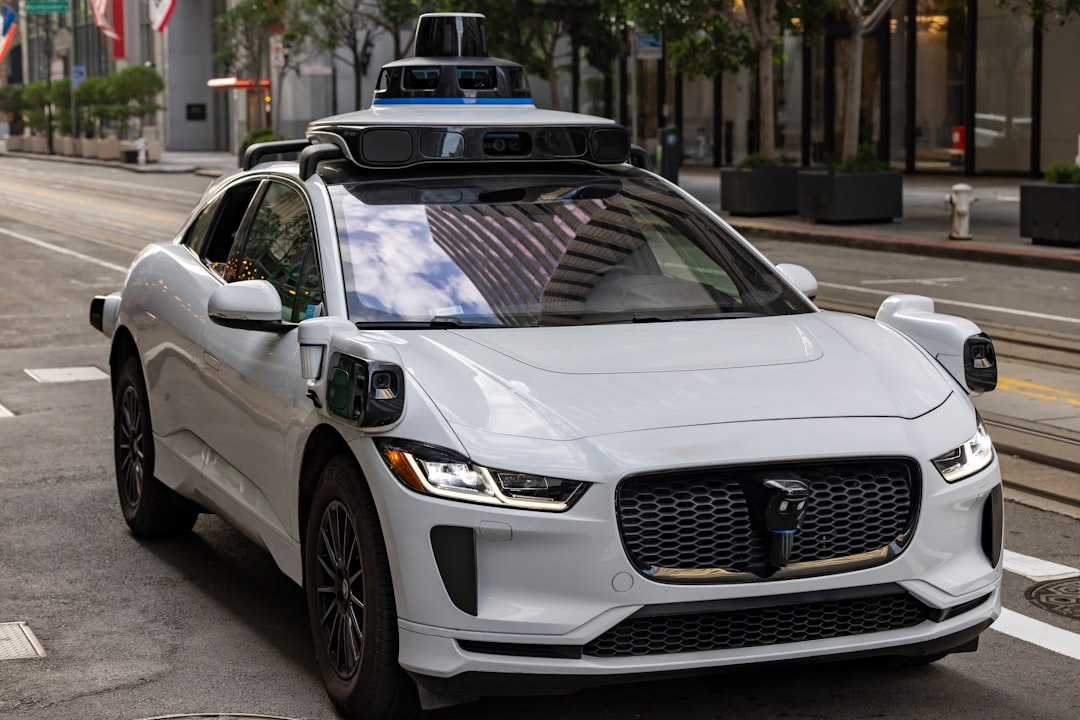
Nuro, known for its self-driving delivery vehicles, initiated public road testing of its autonomous driving software in Tokyo in mid-2024. This represents the company's first foray outside the U.S. The vehicles navigate mixed traffic environments—including cars, bicycles, and pedestrian traffic—using sensors and AI algorithms designed to interpret dynamic urban signals.
The central technology here is the autonomous driving software, which processes real-time data from lidar, radar, and cameras to make driving decisions without human intervention. Tokyo’s streets pose unique challenges, including narrower lanes, different traffic regulations, and a high density of pedestrians, which test the software’s adaptability.
How Does Nuro’s Technology Work?
Nuro’s autonomous system relies on a combination of sensor fusion and machine learning. Sensor fusion means combining inputs from lidar (light detection and ranging), radar, and multiple cameras to create a 360-degree understanding of the vehicle’s surroundings.
The machine learning models predict pedestrian and vehicle movements to avoid collisions and ensure smooth navigation. The software adapts to complex traffic patterns and local driving customs, all while maintaining safety protocols.
Why Is Testing Autonomous Vehicles in Tokyo So Challenging?
Tokyo's urban environment is one of the most demanding for AV operations. The challenge goes beyond just navigating streets—it includes recognizing culturally unique behaviors and interpreting dense traffic signals rapidly.
Key challenges include:
- Unpredictable pedestrian movements: Pedestrians in Tokyo often cross streets at unmarked locations, requiring the software to anticipate irregular patterns.
- Complex road layouts: Narrow alleys and multilayered roadways create difficulties for sensor accuracy and route planning.
- Heavy mixed traffic: The coexistence of cars, motorcycles, bicycles, and pedestrians demands precise and fast decision-making from the AV software.
What Obstacles Did Nuro Encounter During Testing?
From firsthand observations and reported testing phases, certain setbacks are inevitable. For example, adapting object detection algorithms for the smaller size and speed of bicycles in Tokyo caused initial misinterpretations.
Moreover, integrating local traffic signal rules and dynamic signage into the decision-making system required iterative adjustments. Real-world testing gave valuable feedback that simulations in U.S. environments hadn't fully captured.
When Should AV Companies Consider International Testing?
Expanding autonomous vehicle testing internationally is not simply about scaling but about deep adaptation. Companies should consider such moves when:
- Their software has matured under diverse but domestic conditions.
- They have established partnerships or regulatory pathways in the target region.
- They seek to improve robustness by exposing the system to new traffic patterns and road types.
Nuro’s Tokyo testing reflects a strategic step—an evaluation of how their technology performs outside the predictable confines of the U.S. road environment.
What Finally Worked for Nuro in Tokyo?
Incremental improvements based on data from public road testing proved essential. Allowing the system to 'learn' from real pedestrian behaviors and local vehicle interactions helped calibrate the models.
The company also adjusted sensor placements and refined software to improve detection accuracy in narrow lanes and busy sidewalks. These enhancements highlight that successful AV adoption requires practical tuning rather than relying exclusively on simulations or controlled environments.
Key Takeaways from Nuro’s Tokyo Expansion
- Real traffic exposure is irreplaceable: Simulated environments can only approximate the complexity of a city like Tokyo.
- Local traffic behavior must inform software design: Autonomous driving software cannot be one-size-fits-all.
- Incremental adaptation fosters safety and reliability: Small, data-driven changes matter most in new environments.
What Should You Consider When Evaluating Autonomous Vehicle Expansion?
If you are an AV company or stakeholder planning international testing, factor in these trade-offs:
- Regulatory challenges versus innovation speed: Navigating laws may slow launch but ensures safe integration.
- Investment in localization versus technology reuse: Adapting software might require significant new development.
- Risk exposure versus learning opportunity: Public road tests carry risks but yield critical data impossible to simulate.
Quick Reference: Nuro’s Lessons from Tokyo Testing
- Autonomous vehicle tech demands real-world tuning in complex urban settings.
- Local traffic customs and unique pedestrian behavior require software adaptation.
- Comprehensive multi-sensor systems enhance environment perception accuracy.
- International expansion tests the robustness and flexibility of AV software.
Final Thoughts and Your Next Steps
Nuro's Tokyo pilot underscores the necessity of rigorous, place-based testing in the evolution of autonomous vehicles. For companies planning their own international expansions, a practical decision matrix can streamline the evaluation process:
- Assess software maturity in your home market.
- Research local traffic patterns and regulatory framework in target cities.
- Plan public road tests with incremental goals and safety margin.
- Collect and analyze data, then iteratively update algorithms and hardware.
- Evaluate readiness for full-scale deployment after multiple pilot cycles.
Using such a checklist will help weigh trade-offs between innovation speed and safety assurance, critical for autonomous technologies destined for international roads.
Technical Terms
Glossary terms mentioned in this article




Comments
Be the first to comment
Be the first to comment
Your opinions are valuable to us