
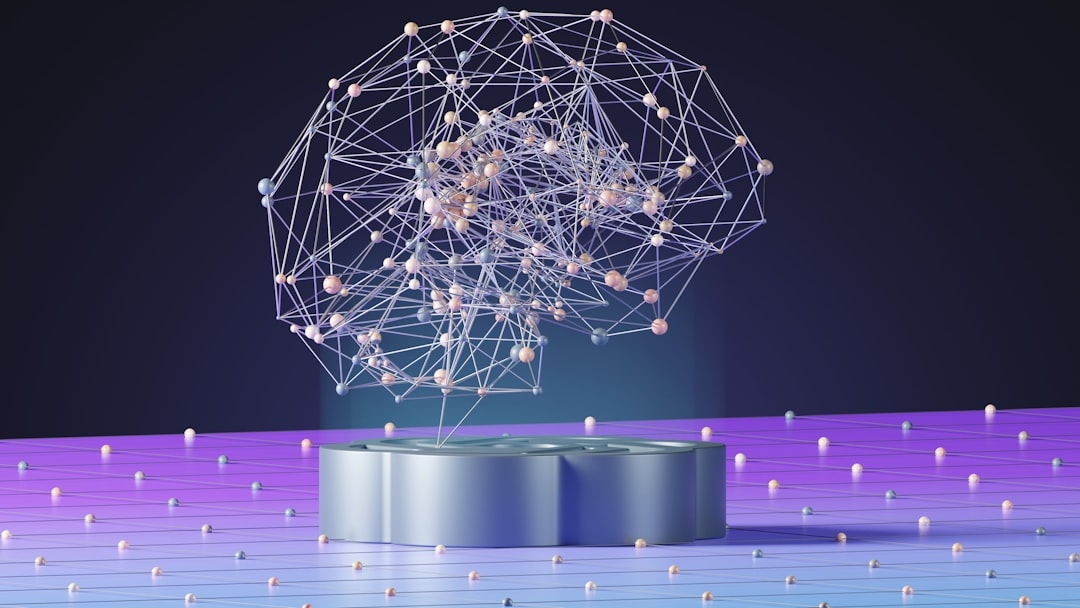
In the rapidly evolving field of artificial intelligence, effective collaboration and adaptability are becoming paramount. Anthropic's recent release of Opus 4.6 emphasizes these themes by introducing a feature called ‘agent teams’. This update aims to broaden the appeal and applicability of Anthropic's AI models, enhancing their ability to work collectively on complex tasks.
Understanding what makes Opus 4.6 notable requires diving into its core concept and recognizing its potential impact on the AI landscape.
What Is Opus 4.6 and the New ‘Agent Teams’ Feature?
Opus 4.6 is the latest version of Anthropics’ language model, augmented with a unique system called agent teams. At its heart, an agent team is a set of specialized AI agents that can cooperate, each contributing different strengths or skills toward a shared objective. Think of it as a project team of experts, where every member plays a distinct role, making the whole more capable than any single agent alone.
These agent teams are designed to improve responses, accuracy, and logic flow when dealing with complex or multi-step problems. By dividing work among agents — for example, one focusing on data retrieval, another on reasoning, and yet another on producing human-like text — the model can handle tasks that previously would have been too nuanced or detailed.
How Does the ‘Agent Teams’ Concept Work in Practice?
The concept resembles a software architecture pattern called microservices, where small services work independently yet communicate to fulfill complex applications. Similarly, within Opus 4.6, each AI agent within a team processes facets of a query and shares insights. This collaboration allows for parallel processing and error checking, reducing the cognitive load on a single agent and improving overall reliability.
For instance, if the objective is to generate a comprehensive report with statistical analysis and narrative summary, one agent might focus on extracting numerical data while another formulates the prose. Their outputs are then synthesized for a coherent final product.
When Should You Use Anthropic’s Opus 4.6 with Agent Teams?
Opus 4.6 is ideal for tasks that require multi-dimensional problem solving or simultaneous handling of different information types. Use cases include:
- Complex content creation involving research, analysis, and summarization
- Automated workflows where various data sources and logic need to be integrated
- Collaborative AI applications such as virtual assistants managing multiple user intents
This approach supports enhanced scalability compared to earlier monolithic models, making it attractive for businesses and developers who want modular AI capabilities.
When NOT to Use Agent Teams in Opus 4.6?
Despite its advantages, agent teams are not a universal solution. For straightforward, single-turn queries or simple tasks, a standard AI model without the overhead of coordinating multiple agents may be faster and more cost-effective.
Additionally, because agent teams introduce complexity, they may be less suitable for latency-sensitive applications where real-time responses are critical. The coordination layer adds some processing time, so applications requiring millisecond-level performance might find this approach cumbersome.
Common Misconceptions About ‘Agent Teams’ Technology
One common assumption is that more agents working in tandem automatically mean better results. However, in practice, managing communication and coherence among multiple agents introduces new challenges. If not well-structured, it can lead to inconsistencies or delays.
Another misconception is that agent teams reduce human oversight needs. While they improve autonomy, proper monitoring remains crucial to ensure quality and prevent cascading errors.
Advanced Uses and Expert Insights
Experts view agent teams as a promising step toward more human-like AI collaboration. Similar to teams in a workplace, these agents can specialize, delegate, and verify work within AI systems.
Looking ahead, we might see further refinements, such as dynamic team formations based on task demands or enhanced learning abilities among cooperating agents, leading to more fluid and context-aware AI solutions.
So far, in real-world testing, the trade-off between increased complexity and improved results requires a careful cost-benefit analysis tailored to specific applications.
How Can You Try Anthropic’s Opus 4.6 Agent Teams Yourself?
To get hands-on experience, try designing a multi-step task that involves different types of processing, like data extraction, logical reasoning, and natural language generation. Compare output quality and efficiency when using Opus 4.6's agent teams versus a standard single-agent model.
This will help you evaluate where agent collaboration offers tangible benefits and where simpler AI configurations suffice.
Key takeaway: Anthropic’s Opus 4.6 introduces a novel, team-based AI approach that can expand functionality but requires deliberate use based on task complexity and performance needs.
Technical Terms
Glossary terms mentioned in this article




Comments
Be the first to comment
Be the first to comment
Your opinions are valuable to us