Wednesday, January 7, 2026 Trending: #ArtificialIntelligence
AI Term of the Day: Latent Space
Beyond the Hype: Why AI Won't Steal Your Job (But Your Workflow Will Change)
Generative AI

Beyond the Hype: Why AI Won't Steal Your Job (But Your Workflow Will Change)

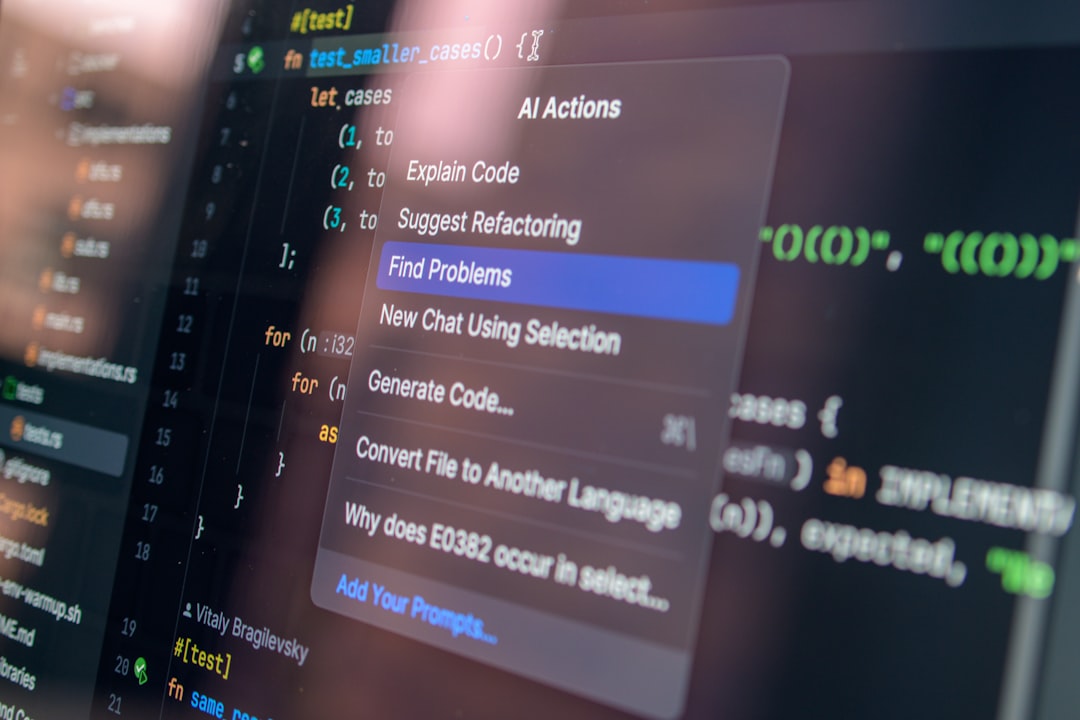
Is AI coming for your IDE? We look past the marketing noise to examine how LLMs actually perform in production environments. From the disaster of AI-generated refactors to the brilliance of instant boilerplate, this article explores why the future isn't about replacement, but about high-velocity orchestration and the emergence of the 'AI-Augmented Architect'.

A
Andrew Collins contributor
7 min read

Three months ago, I watched a senior engineer spend an entire weekend untangling a production database migration that had been 'optimized' by an AI agent. On paper, the code looked elegant. It used modern syntax, followed PEP 8, and even included helpful comments. But it lacked context. It didn't know that our legacy PostgreSQL instance had a specific locking behavior under high load. The AI saw a pattern; the engineer saw a disaster. This is the current state of the 'AI Revolution' in software engineering: a world of incredible potential tethered to a lack of situational awareness.

The conversation around AI in dev work has reached a fever pitch. With the release of models like Claude 3.5 Sonnet and OpenAI's o1-preview, the benchmarks are higher than ever. Yet, the question remains: are we being replaced, or are we just getting a better set of power tools? To answer that, we have to look at the gap between a 'hello world' demo and a mission-critical distributed system.

The Hype vs Reality: The '10x' Illusion

If you follow tech influencers, you’d think software engineering is now just 'prompting.' Tools like Devin or OpenDevin promise autonomous agents that can fix GitHub issues while you sleep. While these tools are impressive, they often hit a wall called the 'last mile problem.' Coding is only 20% of a developer's job. The other 80% is communication, system design, security auditing, and understanding the 'why' behind a business requirement.

The reality is that AI tools are currently 'probabilistic,' not 'deterministic.' They predict the next most likely token based on a massive dataset. They don't 'understand' that a specific API call might incur a $10,000 AWS bill or that a certain library has an unpatched CVE. We are moving from a world where we write code, to a world where we review and orchestrate code. The volume of code is increasing, but the value of a single line of code is decreasing.

Where It Shines: The Friction Killers

AI is phenomenal at eliminating 'drudge work.' It’s like having a junior developer who has memorized every documentation page on the internet but has zero common sense. Here is where it genuinely empowers us:

  • Boilerplate Generation: Setting up a new FastAPI project with Pydantic schemas and SQLAlchemy models used to take 30 minutes. Now, it takes 30 seconds.
  • Regex and Complex Syntax: Writing a regex for nested JSON structures is a nightmare. AI handles this with surgical precision.
  • Unit Test Scaffolding: Generating edge cases for tests (Table Driven Tests) is significantly faster.
  • Polyglot Programming: If you're a Python expert forced to write a Go microservice, AI acts as a real-time translator for syntax and idioms.
// Example: AI-generated boilerplate for a specialized service
// Prompt: Create a Go middleware for JWT validation using the 'golang-jwt' v5 package

func AuthMiddleware(next http.Handler) http.Handler {
    return http.HandlerFunc(func(w http.ResponseWriter, r *http.Request) {
        tokenStr := r.Header.Get("Authorization")
        token, err := jwt.Parse(tokenStr, func(token *jwt.Token) (interface{}, error) {
            return []byte("secret"), nil
        })
        if err != nil || !token.Valid {
            w.WriteHeader(http.StatusUnauthorized)
            return
        }
        next.ServeHTTP(w, r)
    })
}

Where It Falls Short: The Hallucination Debt

I have seen AI suggest libraries that were deprecated five years ago or, worse, libraries that don't exist at all. This 'hallucination debt' is dangerous because the code often looks correct. If you don't have the senior-level experience to spot the flaw, you're just shipping bugs faster. AI lacks the 'Big Picture'—it doesn't understand your specific infrastructure constraints, your team's custom internal frameworks, or the long-term maintainability of a 'clever' hack.

Common Mistakes When Using AI

  • The 'Copy-Paste' Trap: Accepting AI suggestions without running them through a debugger or code review process.
  • Ignoring Context Windows: Expecting an AI to understand a 100k line repository when its context window only sees the last few files you opened.
  • Security Blindness: Trusting AI to write secure SQL queries or handle encryption. AI often prioritizes 'working' code over 'secure' code.

Alternatives to Consider

Instead of full-blown AI autonomy, consider these more stable paths to productivity:

  • Strict TDD (Test Driven Development): Write your tests first, then let the AI write the implementation. This forces the AI to meet a deterministic contract.
  • Low-Code for Internals: Use Retool or Appsmith for internal CRUD dashboards instead of wasting AI cycles on frontend CSS battles.
  • Custom RAG (Retrieval-Augmented Generation): Instead of generic ChatGPT, use tools like Cursor that index your local codebase specifically to provide relevant context.

Final Verdict

AI will not replace developers, but developers who use AI will replace those who don't. We are moving toward a 'Reviewer-Centric' model of software engineering. Your value will no longer be measured by how many lines of code you can churn out in an hour, but by your ability to architect systems, ensure security, and verify the logic of the AI's output. The 'Code Monkey' is dead; the 'Systems Architect' is more important than ever.

We are entering an era of 'Software Orchestration.' In the next few years, we'll see AI move from the IDE into the CI/CD pipeline, proactively suggesting performance patches and identifying bottlenecks before they hit production. The human's job is to steer the ship, set the destination, and make sure the engine doesn't overheat. If you're worried about your job, stop focusing on syntax and start focusing on architecture.

Enjoyed this article?

Comments

Be the first to comment

G

Be the first to comment

Your opinions are valuable to us