
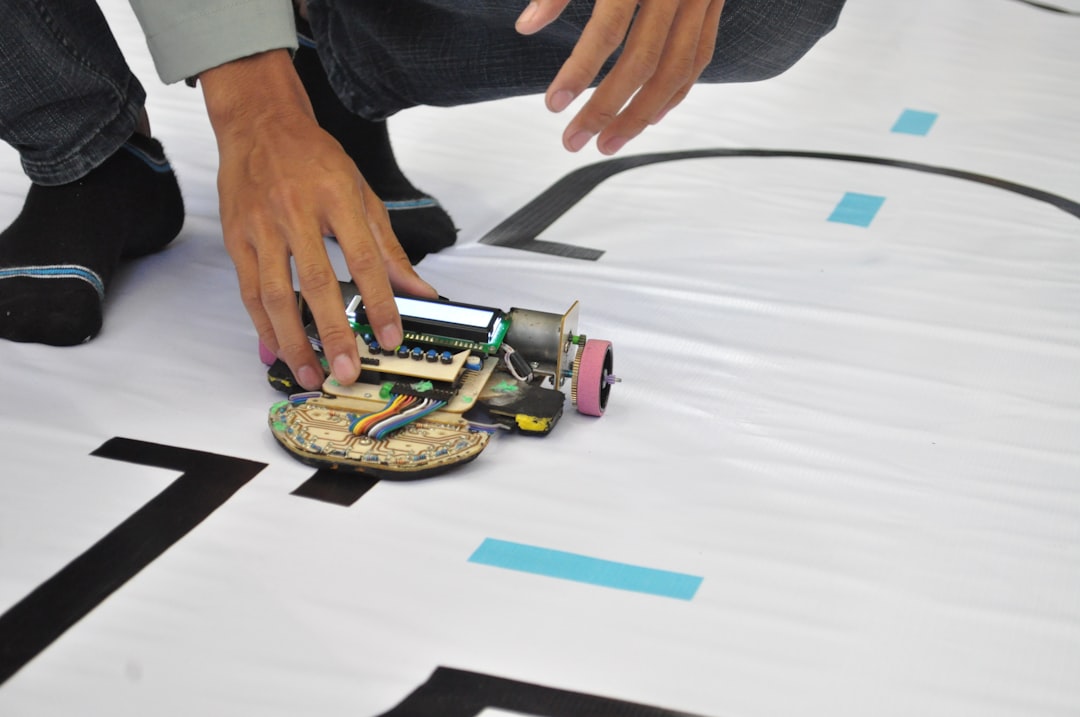
I remember the first time I saw a truly autonomous robot vacuum cleaner. It felt like a glimpse into the future, a promise of a life less burdened by mundane tasks. Then came the incremental improvements: smart home hubs, voice assistants, and now, robots that can fold laundry and prepare meals. LG's CLOiD robot, showcased at CES, embodies this ambitious vision of a 'zero labor home.' But after years of working with and around automation in various capacities, I’ve learned to be cautiously optimistic. The journey from a compelling demo to a seamless, reliable home assistant is often a lot more complex than the glossy marketing suggests.
The idea of a robot handling household chores – from folding clothes to making breakfast – conjures images of effortless living. LG's CLOiD robot, teased as a solution for a 'zero labor home,' aims to bring this futuristic concept closer to reality. At CES, the company unveiled more details about this ambitious project, highlighting its capabilities in automating everyday tasks. While the prospect is exciting, it's crucial to temper expectations with a dose of practical reality, based on the often-unforeseen challenges encountered when deploying sophisticated automation in real-world environments.
Overview: The Promise of the CLOiD Robot
LG's CLOiD robot is positioned as a cornerstone for the 'zero labor home.' The concept suggests a future where domestic tasks are largely managed by intelligent machines, freeing up human time for more engaging or restful pursuits. The robot's reported capabilities at CES include sophisticated laundry folding and meal preparation. This isn't just about convenience; it’s about fundamentally reshaping the domestic landscape. Imagine a home that functions with minimal manual intervention for chores. This vision, while appealing, often glosses over the intricate engineering and complex interactions required.
Approach A: Deep Dive into Laundry Folding Automation
Folding laundry. It sounds simple, yet it’s a task that has consistently challenged roboticists. The variability in fabric types, sizes, and how clothes are presented (creased, balled up, or neatly piled) makes it a surprisingly complex problem for machines. LG's CLOiD robot reportedly tackles this by employing advanced manipulation and computer vision. The idea is to identify different garments, understand their structure, and execute precise folding motions. In a lab setting, this might be impressive. However, in a real home, a stray sock, a tangled shirt, or a delicate fabric can easily derail the process.
Consider the challenges: recognizing a t-shirt versus a pair of trousers, distinguishing between a wrinkle and a seam, and applying just the right amount of pressure without damaging the fabric. My experience has shown that while AI can get remarkably good at recognizing patterns, the physical dexterity and adaptive intelligence needed for tasks like folding are still in their nascent stages for broad consumer applications. Robots often struggle with the 'edge cases' – the unexpected deviations from the norm that humans handle intuitively.
The Technical Hurdles of Fabric Manipulation
At its core, laundry folding automation relies on several key technologies:
- Computer Vision: This is crucial for identifying the type, size, and orientation of garments. Advanced algorithms are needed to differentiate between similar-looking items and to detect wrinkles or damage. Think of it like teaching a computer to 'see' and understand the 3D shape of a piece of clothing, even when it's contorted.
- Robotic Gripping and Manipulation: The robot needs dexterous manipulators (arms and 'hands') capable of picking up, holding, and folding various fabrics without tearing or snagging them. This requires precise force sensing and fine motor control, akin to human touch but often more challenging to replicate.
- Machine Learning Models: These models are trained on vast datasets of folded clothes to learn patterns and sequences. However, training data might not capture the full spectrum of real-world laundry chaos.
While LG's announcement implies significant progress, the practical implementation in a home environment, with its inherent messiness and variety, is where these technologies are truly tested. A single misplaced fold can lead to a poorly folded garment, or worse, a jammed mechanism. This is why, from my experience, these seemingly simple tasks are often the most complex to automate reliably.
Approach B: Automating Kitchen Tasks and Meal Preparation
The dream of a robot chef preparing breakfast might seem even more far-fetched, but LG's CLOiD aims to address this too. This involves a complex interplay of ingredient recognition, precise dispensing, cooking, and plating. Imagine a robot that can not only measure out ingredients but also crack an egg without crushing the shell, sauté vegetables perfectly, and assemble a dish. This requires a level of finesse and environmental awareness that pushes the boundaries of current robotics.
I've seen prototypes that can perform basic cooking tasks, but they often require pre-portioned ingredients and highly controlled environments. The real challenge is adapting to the variability of a home kitchen: different brands of flour with different textures, vegetables that aren't perfectly uniform, and cooking surfaces that can vary in temperature. The 'learning' involved is immense, and the potential for error – from undercooking food to creating a safety hazard – is significant.
The Complexity of Culinary Robotics
Key components for a robot chef include:
- Ingredient Recognition and Handling: The robot must identify a vast array of ingredients, understand their properties (e.g., liquid, solid, brittle), and handle them appropriately. This involves advanced sensing and manipulation to avoid crushing, spilling, or mishandling.
- Precision Dispensing and Mixing: Accurate measurements are critical in cooking. Robots need to dispense ingredients precisely, whether it's a pinch of salt or a cup of flour, and mix them effectively.
- Cooking Process Control: Managing heat, time, and cooking methods (sautéing, boiling, baking) requires sophisticated control systems that can adapt to real-time feedback. A robot needs to know when to stir, when to flip, and when the food is perfectly cooked.
- Safety and Hygiene: In a kitchen environment, safety is paramount. Robots must operate without posing a fire risk, a risk of contamination, or a risk of injury. Cleaning and sanitization protocols are also essential.
LG's CLOiD aims to integrate these elements, but the practicalities of a busy kitchen – with its dynamic nature and human presence – present significant challenges. The 'zero labor' aspect might be more about reducing active labor than eliminating it entirely, as the robot itself will require maintenance, programming, and oversight.
When to Use Each Approach (and When Not To)
The ambitious goals of a 'zero labor home' robot like CLOiD spark important discussions about the future of domestic automation. However, it's vital to understand where such technologies are best suited and where they might fall short.
Where CLOiD's Approach Might Shine (Potential Use Cases)
- Repetitive, Standardized Tasks: For tasks with very little variation, such as folding identical t-shirts from a specific laundry service or preparing a fixed menu of simple meals, the robot could be highly effective. Think of a controlled environment like a hotel laundry or a specialized meal prep service.
- Assisted Living and Accessibility: For individuals with mobility issues or certain disabilities, a robot that can perform essential chores could be life-changing, providing a level of independence that might otherwise be impossible.
- Time-Saving for Busy Professionals: Even if it doesn't achieve 'zero labor,' a robot that handles a significant portion of chores could free up valuable time for individuals and families with demanding schedules.
When NOT to Expect Miracles (Limitations and Pitfalls)
- Highly Variable or Delicate Items: Expect issues with irregularly shaped clothes, very delicate fabrics (like silk or lace), or anything that deviates significantly from standard items. The robot's learning algorithm might struggle with the sheer diversity of personal wardrobes.
- Complex Culinary Creativity: While a robot might follow a recipe, it won't have the intuition of a seasoned chef. Taste adjustments, improvisation based on available ingredients, or adapting cooking methods on the fly are human skills that are very difficult to replicate.
- Unpredictable Home Environments: Spills, misplaced items, pets, or children can all introduce unexpected variables that current robots are not equipped to handle seamlessly. The 'smart home' needs to be truly adaptable, not just predictable.
- High Cost and Maintenance: Advanced robotics typically come with a premium price tag. Furthermore, these complex machines will require regular maintenance, software updates, and potentially costly repairs, which may offset the perceived labor savings.
Hybrid Solutions: The More Realistic Path Forward
The pursuit of a completely 'zero labor home' is a compelling, almost utopian, vision. However, my experience in this field suggests that the most practical and achievable future lies in hybrid solutions. This is where automation complements human effort rather than aiming to replace it entirely. Instead of a single robot doing everything, we might see specialized robots or integrated systems that handle specific, well-defined tasks.
For instance, a robot arm that efficiently sorts laundry before you fold it, or a smart oven that perfectly bakes a pre-prepared meal. This approach leverages the strengths of both humans and machines. Humans excel at creativity, adaptability, complex problem-solving, and nuanced judgment. Robots, on the other hand, are brilliant at repetitive tasks, precision, and performing dangerous or strenuous jobs.
Think of it like a well-orchestrated symphony. Each instrument plays its part flawlessly, and the conductor (the human) ensures the overall harmony. The CLOiD robot, while ambitious, could be a significant step in this direction, not as an all-encompassing solution, but as a powerful tool within a broader ecosystem of automated assistance. Its success will likely depend on its ability to integrate intelligently with human workflows, rather than attempting a complete takeover of domestic duties.
My Take: The Future is Assisted, Not Unburdened
LG's CLOiD robot represents a bold stride toward the future of domestic automation. The idea of a 'zero labor home' is undeniably attractive, a dream that has long captured our imagination. However, based on my years immersed in the world of robotics and automation, I believe the path to this future is paved with more collaboration than complete abdication of tasks. The 'robot uprising' we should anticipate isn't one of dominance, but of partnership. These machines will become invaluable assistants, augmenting our capabilities and freeing us from the most tedious chores. But the nuanced, creative, and adaptable nature of human intelligence will remain indispensable. The CLOiD robot might fold your shirts, but it's unlikely to replace the human touch that makes a house a home, or the joy of cooking a meal from scratch for loved ones.




Comments
Be the first to comment
Be the first to comment
Your opinions are valuable to us