
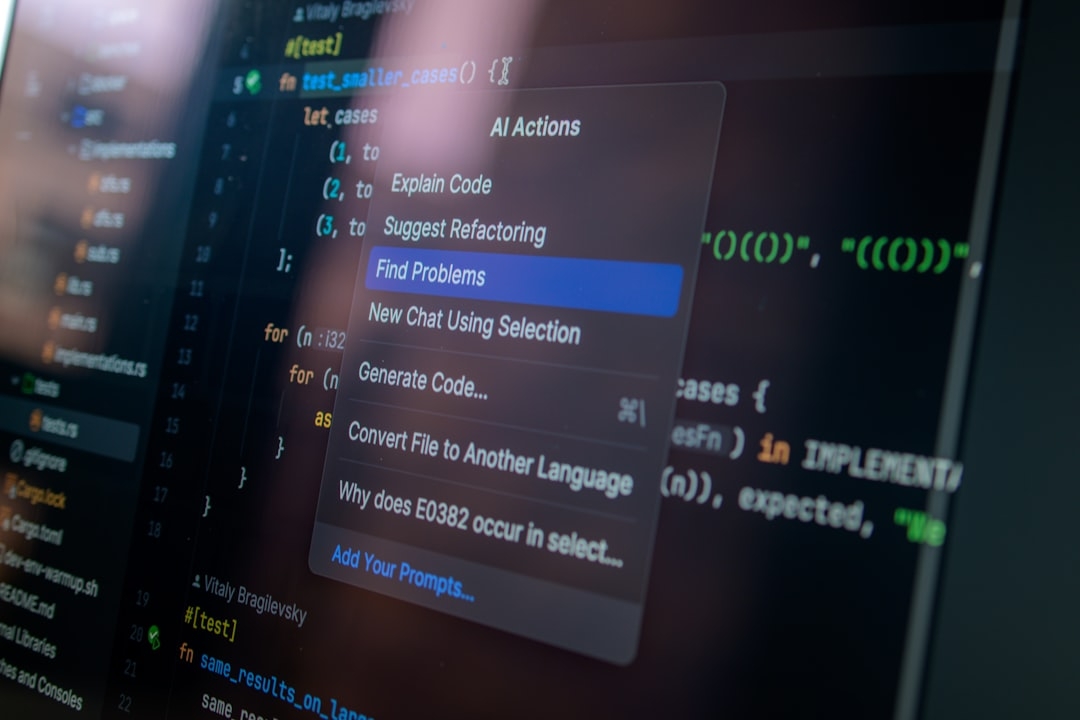
In a surprising move in the AI landscape, Anthropic has acquired Seattle-based Vercept, a startup recognized for developing advanced AI tools capable of performing tasks inside software applications much like a human with a laptop would. This acquisition comes shortly after Meta poached one of Vercept's key founders, signaling a reshuffle in the competitive AI labor market.
Vercept specializes in creating agentic AI tools: these systems aren't just passive assistants but active agents capable of navigating and completing complex tasks autonomously within various software environments. Their flagship innovation is a computer-use agent that mimics human interaction patterns inside different applications—imagine an AI that can open software, manipulate data, and execute workflows with human-like decisions.
How Does Vercept’s Computer-Use AI Differ from Standard Automation?
Traditional automation relies on predefined scripts or robotic process automation (RPA), which follow exact instructions without adaptation. Vercept's agents, however, operate with a level of agency, making decisions in real-time to handle unpredictable scenarios. This technology aligns with what AI researchers call agentic tools, which can interpret context, plan multi-step tasks, and adjust behavior as needed.
This approach addresses common limitations of conventional automation, where unexpected interface changes or unusual inputs can cause failures. Vercept's agents resemble a skilled worker at a computer, capable of multitasking without being explicitly programmed for every possible variation.
What Challenges Did Meta Face When Recruiting Vercept’s Founder?
Meta’s recruitment of one of Vercept’s founders underscores the intense demand for talent specializing in agentic AI, but it also reflects real-world hurdles in scaling these technologies. Bringing leading minds into large tech environments can accelerate development but often encounters integration challenges, such as aligning startup agility with corporate processes.
In practice, moving AI innovations from research prototypes to robust, production-ready systems poses reliability and maintainability issues. For AI that must interact intricately with software interfaces made for humans, even minor UI updates can disrupt automated flows, requiring constant adaptation.
Why Agentic AI Tools Are Both Promising and Risky
The promise lies in AI that can reduce manual task loads by handling complex multi-application workflows. However, these systems must balance autonomy with predictability. Overly autonomous agents might make decisions that appear efficient but can cause unintended side effects if not carefully constrained.
Vercept's expertise in creating these adaptive agents is crucial for pushing beyond brittle automation, yet real deployments teach caution: ensuring agents' behavior aligns with user expectations remains a persistent challenge.
When Should Organizations Consider Using Agentic AI Solutions Like Vercept’s?
Not all businesses benefit equally from agentic AI tools. Organizations facing repetitive administrative processes spanning multiple software systems stand to gain the most. The technology helps eliminate bottlenecks caused by manual switching between apps or conditional decision-making.
However, companies must assess their tolerance for system fragility and the support costs of maintaining AI that interfaces with evolving software. Firms with stable, well-documented workflows and skilled technical teams to oversee agent performance are better positioned to succeed.
Key Considerations Before Deployment
- Workflow Complexity: Tasks involving branching logic and conditional steps are prime candidates for agentic AI.
- Software Stability: Frequent updates to target applications can disrupt AI agents and require ongoing retraining or reprogramming.
- Human Oversight: Continuous monitoring ensures the AI acts in accordance with business rules and mitigates risks.
In essence, Vercept’s AI is less like a fixed tool and more like a semi-autonomous collaborator requiring partnership with humans.
How Can You Evaluate Agentic AI for Your Own Use Case in 20 Minutes?
To quickly appraise if agentic AI solutions like those from Vercept make sense, consider these steps:
- Identify repetitive multi-application tasks in your workflow suitable for automation.
- Document recent software changes to evaluate potential brittleness.
- Estimate the cost of maintaining AI agents amid expected UI shifts.
- Assess human monitoring capabilities and incident response readiness.
- Test a small-scale proof of concept with your most critical workflow.
This framework helps reveal the realistic effort versus benefit ratio of deploying agentic AI tools.
Looking Ahead: What Does This Acquisition Mean for AI Automation?
Anthropic’s acquisition of Vercept signals increasing confidence in AI tools that go beyond scripted automation toward adaptive, agentic models. It also highlights the fierce competition among tech giants to secure talent and technology capable of pushing these boundaries.
While the potential to automate complex workflows holds promise for productivity gains, the journey is far from seamless. Real-world experience shows that human involvement remains essential to oversee AI actions and maintain alignment with organizational goals.
In a market still maturing, verifiable safeguards, thoughtful deployment strategies, and incremental adoption will likely define successful outcomes with agentic AI.
Technical Terms
Glossary terms mentioned in this article










Comments
Be the first to comment
Be the first to comment
Your opinions are valuable to us