
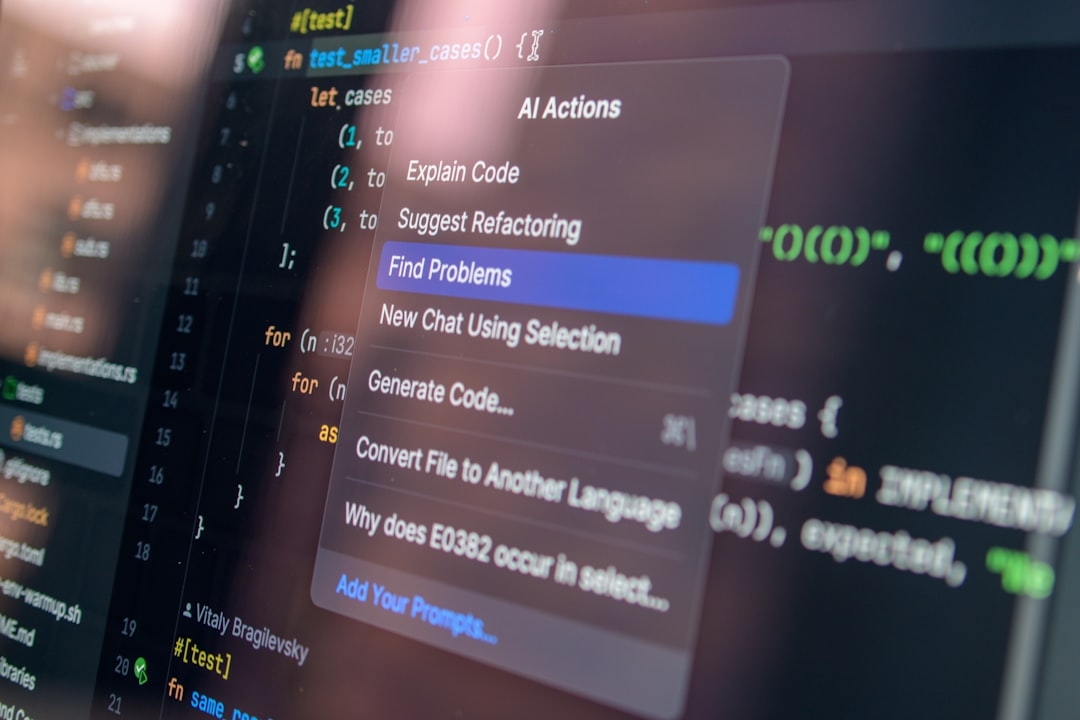
In today's data-driven world, social scientists face a growing challenge: how to efficiently analyze vast amounts of qualitative data such as interview transcripts and images. Traditional manual methods are time-consuming and prone to inconsistency, making it difficult to scale research or gain rapid insights. This is where OpenAI's new open-source toolkit, GABRIEL, steps in — designed to convert qualitative text and images into quantitative data, helping social scientists manage and interpret their research at scale.
What Is GABRIEL and Why Does It Matter?
GABRIEL is an innovative tool leveraging the power of GPT (Generative Pre-trained Transformer) models. It analyzes complex unstructured data — like interview transcripts, ethnographic notes, or photographs — and transforms them into structured numerical or categorical data. This enables researchers to use statistical methods or machine learning techniques on their findings, enhancing objectivity and scalability.
For social scientists, this means less time spent coding data manually and more time focused on interpreting results that matter. By maintaining the nuance of qualitative data while enabling quantitative analysis, GABRIEL bridges a longtime gap between rich descriptive research and large-scale, data-driven conclusions.
How Does GABRIEL Actually Work?
At its core, GABRIEL employs GPT’s natural language understanding capabilities to process text and images by:
- Text Analysis: It reads qualitative responses and extracts relevant features or themes, tagging text with quantitative indicators.
- Image Processing: It identifies objects, contexts, and emotions present in images, converting them into measurable data points.
This transformation happens through sequential steps:
- Input data is preprocessed to remove noise and prepare it for analysis.
- GPT-powered models parse the content for key features specified by the researcher.
- Outputs are aggregated into numeric datasets compatible with common social science statistical tools.
This workflow significantly reduces human bias and error introduced during manual coding. It also accelerates analysis — a task that can take months is shortened to days or even hours.
What Are the Common Misconceptions About Using GABRIEL?
A widespread assumption is that automated qualitative analysis tools oversimplify research or miss context. While automation risks superficial results if misapplied, GABRIEL is specifically designed to retain qualitative richness by allowing researchers to customize the features extracted. It does not replace human expertise but amplifies it.
Another misconception is that only tech-savvy experts can deploy such tools. However, GABRIEL’s open-source nature and clear documentation make it accessible for social scientists without deep programming backgrounds, provided they have basic familiarity with data tools.
Finally, some believe GABRIEL entirely eliminates manual work. In reality, researchers must still design meaningful coding schemes and validate outputs — but the effort required is dramatically reduced.
When Should You Use GABRIEL in Your Research Process?
GABRIEL is most effective when:
- You work with large qualitative datasets (e.g., hundreds of interviews or thousands of images) that are impractical to code manually.
- You need to quantify themes or patterns for statistical validation or machine learning models.
- You want to minimize human bias and increase reproducibility in your coding process.
It’s less ideal for deeply theoretical work requiring nuanced interpretation that can’t be easily quantified. In such cases, GABRIEL should supplement—not replace—traditional qualitative analysis.
What Are Common Mistakes to Avoid When Implementing GABRIEL?
Based on direct experience deploying GABRIEL in social science projects, several pitfalls stand out:
- Overreliance on Automation: Expecting the toolkit to deliver perfect coding without human oversight often results in misleading results. Always manually review output samples.
- Poor Input Preparation: Feeding unclean or inconsistent text/images can confuse the model, producing inaccurate data points.
- Lack of Clear Objectives: Not defining which themes or features to extract leads to irrelevant or noisy quantitative datasets.
- Ignoring Validation: Failing to cross-check automated results against manual coding can compromise research integrity.
A thoughtful combination of automated assistance and researcher judgment is crucial.
Expert Insights: Lessons Learned from Deploying GABRIEL
In practice, GABRIEL proved invaluable in several case studies where time and scale were limiting factors. For instance, a team analyzing community health surveys used it to quickly categorize open-ended text responses, uncovering trends that manual coding missed due to fatigue.
However, initial deployments showed that without dedicated training for researchers on interpreting and fine-tuning GABRIEL’s outputs, the tool’s potential was underutilized. This emphasizes the importance of combining technical setup with domain expertise workshops.
Trade-Offs to Consider
No tool is perfect. GABRIEL accelerates and standardizes analysis but depends heavily on quality data inputs and human guidance. It requires upfront investment in setting clear research questions and validating outputs. Yet, the payoff comes in scalability and improved methodological transparency.
Next Steps: How to Start Using GABRIEL in Your Research
If you want to leverage GABRIEL for your study, here’s a practical 20-30 minute task to get started:
- Collect a small batch of qualitative text (e.g., 5-10 interview excerpts) and related images.
- Define 3-5 key themes or features you want to extract (e.g., sentiment, topics, behaviors).
- Run a preliminary analysis using GABRIEL with default parameters.
- Manually review the extracted quantitative data to assess accuracy.
- Adjust extraction criteria or clean your inputs based on discrepancies found.
This hands-on exercise builds familiarity and highlights how GABRIEL can be tailored to your needs, ensuring you harness its power effectively while avoiding common pitfalls.
GABRIEL represents a meaningful advance in scaling social science research. When implemented carefully, it bridges qualitative richness with quantitative rigor — a necessary step for modern research challenges.
Technical Terms
Glossary terms mentioned in this article











Comments
Be the first to comment
Be the first to comment
Your opinions are valuable to us