
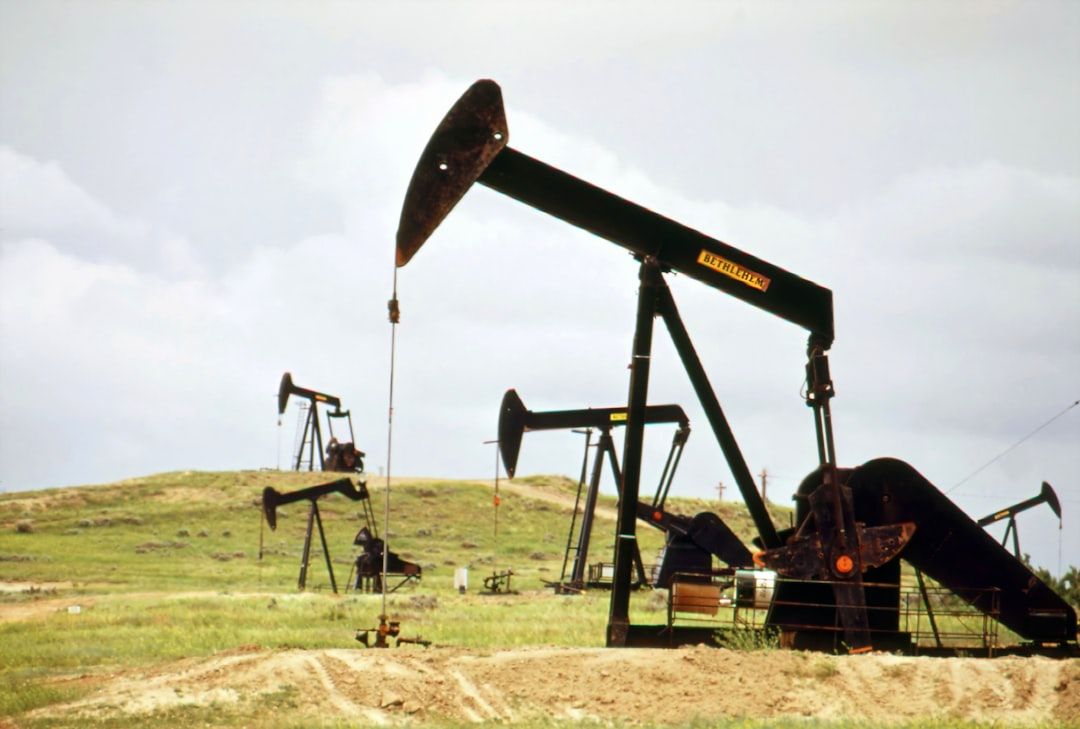
Less than 1% of global oil reserves are controlled by countries with actively growing production. Yet, Venezuela, a nation grappling with severe economic and political crises, sits on an estimated 300 billion barrels of proven oil reserves – the largest in the world. This immense potential has, predictably, drawn the attention of global powers, notably the United States under the Trump administration, which explicitly linked the removal of Nicolás Maduro to securing access to these valuable resources.
The rhetoric has been unequivocal: Venezuela's oil is a prize, and its potential liberation is intrinsically tied to regaining control over its energy sector. However, the path from aspiration to actual extraction is fraught with obstacles that are far more complex than simply changing a political regime. The fundamental question remains: how do US companies actually access these reserves, and more importantly, do they even want to?
Foundation Concepts: Venezuela's Oil Landscape
Venezuela's oil industry, once a powerhouse, has been systematically dismantled over years of mismanagement, sanctions, and political instability. The state-owned Petróleos de Venezuela, S.A. (PDVSA), which historically held a monopoly, is a shadow of its former self. Decades of underinvestment have led to declining production, aging infrastructure, and a severe lack of technical expertise. This isn't a dormant giant waiting to be awakened; it's a heavily damaged behemoth requiring massive overhauls.
The Infrastructure Crisis
Accessing Venezuelan oil means dealing with a critical infrastructure deficit. Refineries are in disrepair, pipelines are corroded, and the necessary equipment for extraction and processing is often obsolete or non-existent. For any foreign company to re-enter, the initial capital expenditure required for rehabilitation would be astronomical. We're talking about billions, potentially tens of billions, of dollars just to get the basic operations back online, let alone scale them to previous levels.
The Sanctions Dilemma
While the political narrative might suggest that removing Maduro is the key to unlocking oil access, the reality of US sanctions is far more nuanced. Existing sanctions, particularly those targeting PDVSA, create significant legal and financial hurdles. Even if a new government were installed, a complete and immediate lifting of all sanctions is unlikely. Navigating the complex web of restrictions, secondary sanctions, and compliance requirements would be a daunting task for any US company. The risk of tripping over compliance rules and facing hefty penalties is substantial.
Core Implementation: The Reluctant Return of US Companies
The allure of Venezuela's vast reserves is undeniable on paper. However, the practical considerations for major oil companies, especially US-based ones, paint a different picture. Many have significant historical investments in Venezuela, and the bitter experience of asset expropriations in the past, particularly under Hugo Chávez, has left a deep scar.
Past Expropriations and Present Risks
Companies like ExxonMobil and ConocoPhillips saw their multi-billion dollar assets seized in the late 2000s. While international arbitration has awarded damages, the actual recovery of those funds has been minimal. This history fosters a deep-seated distrust. For any company to re-engage, there would need to be ironclad guarantees against future expropriation and a clear, stable legal framework for investment protection. Such assurances are, at best, speculative in the current Venezuelan context.
Economic Viability: Is It Worth the Gamble?
Even if sanctions were lifted and legal protections put in place, the economic viability of Venezuelan oil production is questionable in the short to medium term. The cost of production for unconventional heavy crude is inherently higher than for lighter, sweeter crudes found elsewhere. With volatile global oil prices, the margin for error is slim. Investing vast sums in an unstable environment with uncertain returns is a high-stakes gamble that many risk-averse corporations may simply refuse to take. The prospect of facing persistent operational challenges, corruption, and security risks further dampens enthusiasm.
Advanced Patterns: Beyond Simple Access
The conversation around Venezuelan oil needs to move beyond the simplistic notion of 'access.' It involves understanding the intricate interplay of political will, economic realities, and long-term investment strategies. The reserves might be vast, but unlocking them requires a multi-faceted approach that addresses not just extraction but also refining, transportation, and global market integration.
The Role of International Partners and Expertise
Revitalizing Venezuela's oil sector is not a task that can be accomplished by a single US company, even with government backing. It would likely require a consortium of international players, bringing together diverse expertise, capital, and risk tolerance. Companies from countries with less stringent sanctions or those with a higher appetite for risk might be more inclined to explore opportunities. However, coordinating such a diverse group amidst ongoing political uncertainty would be a logistical and diplomatic nightmare.
The Global Energy Transition Context
Furthermore, the global energy landscape is rapidly evolving. The increasing focus on renewable energy and decarbonization might make long-term investments in heavy, carbon-intensive oil extraction less attractive than they once were. While oil will remain a crucial part of the global energy mix for decades, the strategic imperative for massive new investments in legacy fossil fuel assets might be shifting. Companies are increasingly looking for opportunities that align with ESG (Environmental, Social, and Governance) goals.
Production Considerations: Beyond the Barrels
The sheer volume of Venezuela's reserves is a siren song, but the reality of producing that oil is complex. The heavy nature of much of Venezuela's crude requires specialized refining capabilities and higher operational costs compared to lighter crudes. Environmental considerations are also paramount. Any large-scale oil operation carries inherent risks of spills and environmental damage, which would need to be managed with state-of-the-art technology and stringent protocols – resources that are currently scarce in Venezuela.
Technical Expertise and Workforce Challenges
PDVSA has suffered a significant brain drain, with many experienced engineers and technicians leaving the country due to poor working conditions and low pay. Rebuilding a skilled workforce capable of managing modern oil extraction and processing operations would be a monumental undertaking. This isn't just about capital; it's about human capital too. Foreign companies would need to either bring in their own highly paid expatriate staff or invest heavily in training local talent, a process that takes years.
Benchmarking Production Costs
While specific, up-to-date production cost data for Venezuela is hard to come by due to lack of transparency, historical figures and industry estimates suggest that the cost of extracting and processing Venezuelan heavy crude can be significantly higher than in many Middle Eastern or North American oil fields. For instance, Canadian oil sands extraction, another heavy crude operation, can range from $30 to $50 per barrel depending on the method and location. Venezuelan costs, given the degraded infrastructure and operational inefficiencies, could easily exceed this range, especially in the initial phases of rehabilitation. In contrast, some of the lowest production costs globally, like in Saudi Arabia, can be as low as $10-$20 per barrel.
Next Steps: A Pragmatic Outlook
The desire to harness Venezuela's oil wealth is a geopolitical and economic ambition, but the execution is mired in a swamp of practical challenges. It's not simply a matter of political will or regime change; it’s about overcoming decades of decay, navigating complex international sanctions, and convincing multinational corporations that the risks are worth the potential rewards. The historical precedent of asset seizure, coupled with the sheer scale of infrastructure and human capital rebuilding required, makes a swift and easy access scenario highly improbable.
In my experience, focusing on oil-rich nations with unstable political climates often leads to more frustration than profit for foreign investors. The temptation of vast reserves can blind decision-makers to the deep-seated systemic issues that prevent them from being exploited efficiently or profitably. The Venezuelan oil story is a classic case of 'potential vs. reality,' where the reality is a complex, multi-year, and highly uncertain path to recovery. Any strategic approach must acknowledge these profound difficulties rather than relying on optimistic political pronouncements.









Comments
Be the first to comment
Be the first to comment
Your opinions are valuable to us