
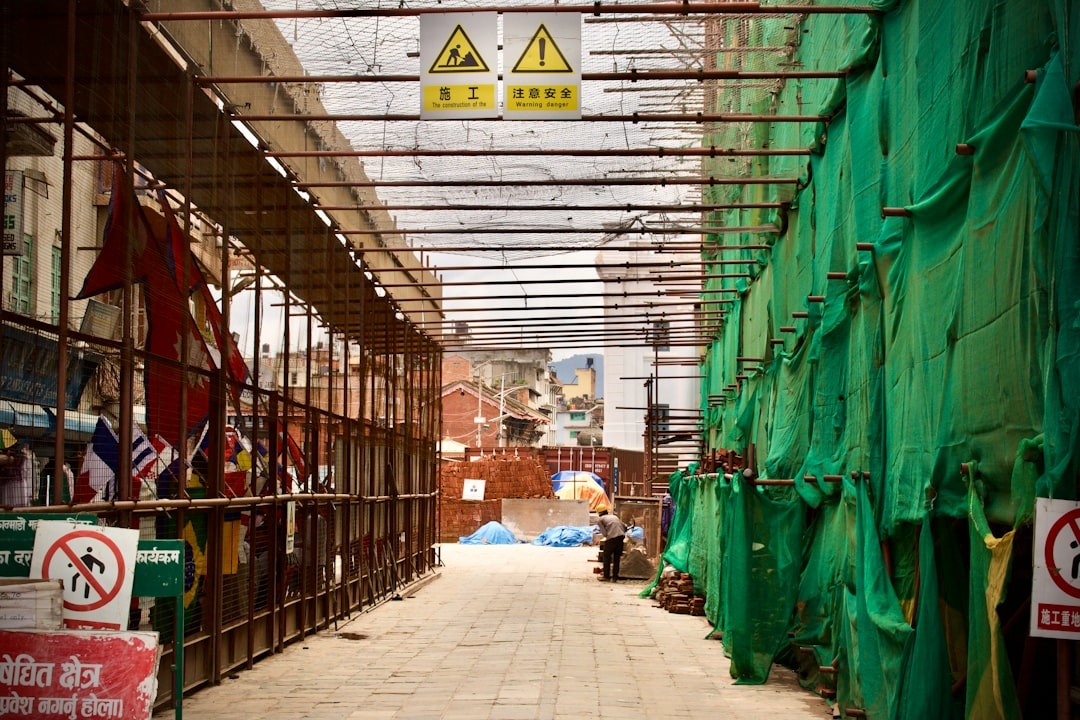
Warehouse safety is not just a guideline—it’s a critical lifeline. The recent tragic death of a 61-year-old worker at Rivian’s warehouse, who became trapped between a tractor trailer and a loading dock, underscores the urgency of addressing industrial safety risks head-on.
This incident, now under investigation by the Occupational Safety and Health Administration (OSHA), forces companies and workers alike to examine existing safety protocols and the harsh realities of loading dock operations.
What Happened at the Rivian Warehouse?
On a Thursday, a fatal accident occurred when a worker got stuck between a tractor trailer and a loading dock at Rivian’s warehouse. The worker, aged 61, was reportedly caught in this confined space, leading to a fatal injury. OSHA immediately launched an investigation to uncover the precise circumstances and any regulatory lapses.
Understanding the environment: Loading docks involve heavy machinery, complex logistics, and inherent risks due to the close interaction between vehicles and personnel. The space between trailers and docks often becomes a hazardous zone if sufficient safety measures are not enforced.
Why Are Loading Dock Accidents So Common?
Loading docks represent a chaotic blend of moving vehicles, equipment, and workers. Several factors contribute to accidents in these settings:
- Tight Spaces: The narrow gap between trailers and loading docks can become a trap when visibility and communication fail.
- Human Error: Misjudgments, distractions, and fatigue can lead personnel into dangerous positions.
- Equipment Malfunction: Faulty dock lifts, trailer restraints, and signals can increase accident rates.
- Lack of Training: Workers may be unaware of procedures designed to keep them safe.
What Does OSHA’s Role Entail?
The Occupational Safety and Health Administration investigates workplace incidents to identify violations of safety laws or regulations. Their probe at the Rivian warehouse will likely focus on:
- Compliance with loading dock safety standards
- Use and maintenance of vehicle restraints and dock levelers
- Worker training documentation and enforcement
- Incident reporting and emergency response procedures
OSHA’s findings could lead to recommendations or penalties aimed at preventing future tragedies.
How Can Such Fatalities Be Prevented?
Effective prevention requires combining technology, training, and strict protocols. Some essential steps include:
- Implementing Vehicle Restraint Systems: These mechanisms lock trailers in place to prevent movement while loading.
- Enhanced Visibility Solutions: Using lights, mirrors, or cameras to monitor blind spots.
- Regular Equipment Inspections: Ensuring dock levelers and lifts function correctly.
- Worker Safety Training: Teaching staff to recognize and avoid hazards.
- Clear Communication: Using signals, radios, or signage to coordinate vehicles and personnel.
What Are the Trade-Offs When Improving Loading Dock Safety?
Some companies hesitate to implement costly technology or invest heavily in training, fearing operational slowdowns. However, cutting corners on safety can result in higher risks and liabilities.
The trade-off between cost and safety can be balanced by:
- Performing risk assessments to prioritize interventions
- Choosing scalable safety technologies that integrate with existing systems
- Establishing clear procedures that streamline, rather than slow, workflow
What Lessons Can Warehouse Operators Learn From This Incident?
This case serves as a stark reminder of the consequences of workplace hazards left unmitigated. Operators should reassess their loading dock safety measures with a critical eye, ensuring no safety step is missed or neglected due to complacency or cost constraints.
Maintaining a culture where safety trumps speed is not negotiable. The loss at Rivian emphasizes that protecting human lives must outweigh the pressure to meet operational targets.
Quick Reference: Key Takeaways
- Loading dock environments are inherently high-risk zones requiring targeted safety measures.
- OSHA investigation highlights the importance of compliance with safety standards and documentation.
- Effective vehicle restraints and enhanced visibility reduce accident risks significantly.
- Proper training and communication among personnel is critical to prevent human error-related incidents.
- Balancing costs and safety requires careful prioritization and forward-thinking investments.
How Should Warehouse Safety Be Evaluated and Improved?
Effective safety evaluation involves systematic review methods such as checklists, audits, and employee feedback. Implementing continuous improvement cycles can identify emerging risks and adapt protocols proactively.
By prioritizing risks and investing in practical countermeasures, warehouses can reduce fatalities and injuries dramatically without crippling their operational efficiency.
What Are the Next Steps for Warehouse Managers?
Managers should:
- Conduct a comprehensive audit of current loading dock safety practices and equipment.
- Engage frontline workers to understand real-world risks and operational challenges.
- Collaborate with OSHA recommendations and industry best practices for compliance and beyond.
- Invest in regular training refreshers emphasizing situational awareness and equipment use.
Concrete Checklist to Assess Your Loading Dock Safety
The following decision matrix can be completed in 15-25 minutes to guide your safety improvements:
- Are vehicle restraint systems installed and functioning on all docks? (Yes/No)
- Are dock levelers inspected regularly with maintenance logs? (Yes/No)
- Is worker training on loading dock hazards documented and updated? (Yes/No)
- Are safety communication tools (radios, signals) standard during dock operations? (Yes/No)
- Are procedures for emergency response clearly posted and practiced? (Yes/No)
- Is personal protective equipment (PPE) provided and enforced for dock workers? (Yes/No)
- Are visual aids like mirrors or cameras used to monitor blind spots? (Yes/No)
- Is fatigue management considered in shift scheduling to reduce human error? (Yes/No)
Analyze the answers to identify any “No” responses as priority areas for improvement. This simple yet effective tool helps prevent tragedies like the one experienced at Rivian’s warehouse.
The loss of a worker is a sobering wake-up call. Warehouse operators must continually challenge complacency to protect their employees and operations alike.
Technical Terms
Glossary terms mentioned in this article














Comments
Be the first to comment
Be the first to comment
Your opinions are valuable to us