
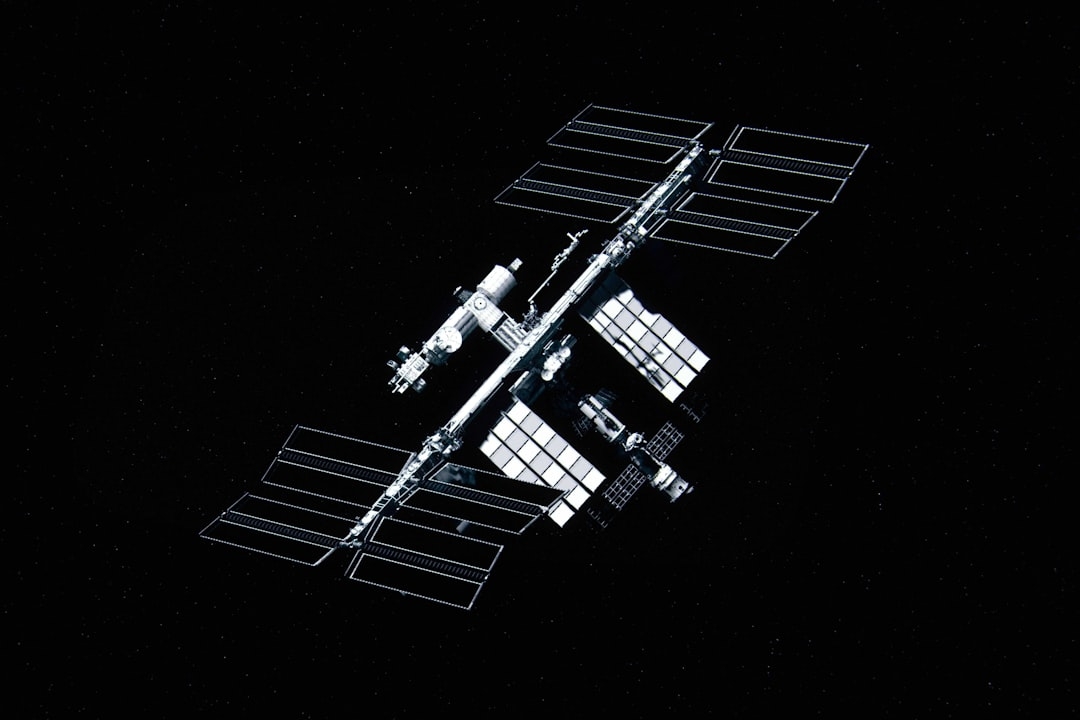
In less than a year, Northwood Space, a startup headquartered in El Segundo, California, has quickly gained significant traction in the aerospace industry. The company recently announced closing a $100 million Series B funding round alongside securing a $50 million contract with the United States Space Force. These developments underscore Northwood Space's growing importance in the space technology sector.
What Does Northwood Space Do?
Northwood Space specializes in deploying satellite constellations to offer persistent earth observation and communications. Their technology enables continuous coverage of critical areas, a major advantage over traditional satellites that only pass over regions sporadically. Their approach supports a broad range of applications including defense, environmental monitoring, and telecommunications.
Understanding Persistent Earth Observation
Persistent Earth observation refers to the ability to monitor a specific geographic location continuously, providing real-time or near-real-time data. This is achieved through satellite constellations—groups of low-earth orbit (LEO) satellites working in tandem. These constellations offer higher revisit rates and better data granularity compared to single, large satellites in higher orbits.
How Does Northwood Space’s Funding Impact Their Growth?
The recent $100 million Series B round is Northwood Space's second equity raise within less than a year, demonstrating strong investor confidence. This capital injection facilitates scaling production, expanding satellite launches, and enhancing ground station infrastructure.
Simultaneously, the $50 million contract with the Space Force highlights the strategic relevance of Northwood’s technology for national security. Through this partnership, Northwood will tailor their satellite solutions to meet the rigorous requirements of military applications, which include secure communication channels and resilient data streams.
Why Is Military Contracting Important for Startups?
Contracts with organizations like the US Space Force provide startups with:
- Validation: Endorsement from a high-profile government agency builds credibility.
- Stable Revenue: Government contracts often come with guaranteed payment schedules.
- Product Development Feedback: Military standards push companies to innovate and improve rapidly.
When Should You Consider Investing or Engaging with Space Startups Like Northwood?
Investors and partners looking to get involved in space technology should assess:
- The startup's current technological maturity and roadmap.
- Market demand for satellite services such as earth observation and communications.
- Existing partnerships and contracts indicating industry trust and validation.
Northwood Space’s rapid funding success and government contracts suggest a startup moving quickly from concept to operational capability. Still, potential collaborators must consider that scaling satellite constellations involves complex regulatory and technical challenges.
When NOT to Engage With Early-Stage Space Startups
Despite attractive opportunities, there are scenarios where involvement may not be ideal:
- High Risk Aversion: Space startups face intense technical hurdles, regulatory compliance issues, and market uncertainties, which can delay returns.
- Resource Constraints: If internal expertise or capital to adequately support integration with space technologies is insufficient, premature engagement could strain resources.
- Short-Term Focus: Satellite constellation deployment often demands multi-year commitments before full commercial benefits are realized.
How Does Northwood’s Approach Differ from Traditional Satellite Providers?
Traditional satellite providers often rely on a few large satellites in geostationary orbits, which can create blind spots in coverage and delayed data updates. Northwood shifts this paradigm by focusing on deploying numerous small satellites in low earth orbit (LEO) designed to operate cooperatively.
This shift reflects a broader industry trend embracing LEO constellations for their advantages in latency, revisit frequency, and cost-effectiveness. However, managing dozens or hundreds of small satellites introduces challenges in coordination, collision avoidance, and data handling that companies like Northwood must address continuously.
What Are the Key Challenges for Northwood Space Going Forward?
Despite their recent successes, Northwood will face obstacles such as:
- Ensuring reliability and redundancy across their satellite network.
- Complying with increasingly complex space traffic management and regulatory requirements.
- Scaling manufacturing and deployment without sacrificing quality.
Successful navigation of these challenges will determine their ability to maintain growth momentum and fulfill contractual commitments.
Summary
Northwood Space's recent $100 million Series B funding and $50 million Space Force contract mark critical milestones for this innovative California-based startup. Their focus on persistent earth observation via satellite constellations places them at the forefront of space-based services with broad applications in defense, telecommunications, and environmental monitoring.
However, the path forward involves complex technical and operational challenges typical of scaling space technologies. Stakeholders must carefully assess risk tolerance and investment horizon when considering involvement with companies like Northwood.
Try It Yourself: Test Your Understanding
To better grasp the operational trade-offs of satellite constellations, try mapping the difference in coverage between a single geostationary satellite and a constellation of low earth orbit satellites.
- Use publicly available satellite tracking tools (such as N2YO) to visualize satellite orbits and revisit times.
- Compare the latency and coverage areas as satellites pass over a fixed location.
- Consider how increasing the number of satellites affects the frequency of observations.
This simple exercise can provide hands-on insights into why companies like Northwood emphasize satellite constellations and persistent monitoring.
Technical Terms
Glossary terms mentioned in this article










Comments
Be the first to comment
Be the first to comment
Your opinions are valuable to us