
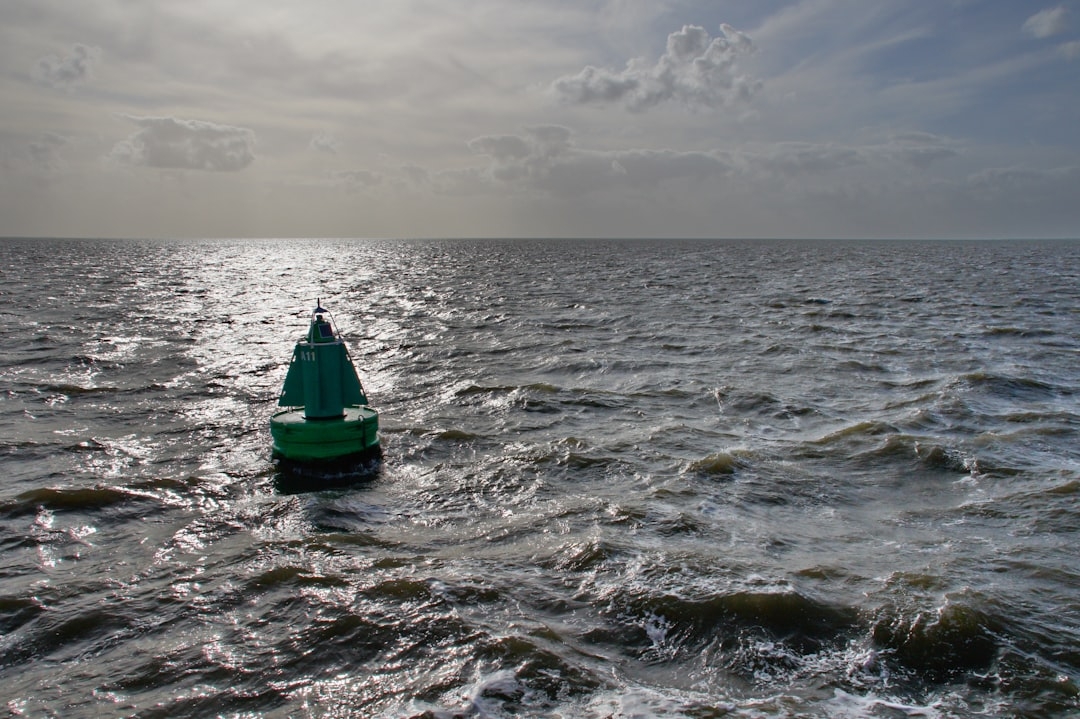
It’s rarely discussed how dangerous it is to gather ocean data in the heart of a Category 5 hurricane, yet Oshen has pioneered technology that does exactly that. Their ocean robot, known as the C-Star, has become the first to collect real-time ocean data autonomously during such extreme weather events. This breakthrough transforms how scientists and agencies study and predict the behavior of fierce hurricanes.
Understanding why getting data from these conditions matters requires brief context: Category 5 hurricanes pack winds exceeding 157 mph, causing intense sea conditions that are challenging and perilous for human-operated vessels. The data collected helps improve weather models and disaster preparedness, but until recently, collecting it safely and reliably was nearly impossible.
How Does Oshen’s C-Star Robot Work in Extreme Oceans?
The C-Star robot is designed specifically to endure the brutal, unpredictable environment found in major hurricanes. It operates autonomously, meaning no crew is needed onboard, removing human risk during dangerous missions. The robot gathers oceanographic data such as wave height, sea surface temperature, and salinity—critical metrics for understanding hurricane dynamics.
To achieve this, the robot features a robust hull built to withstand harsh impacts and continuous battering by waves. It is equipped with advanced sensors calibrated to function accurately under extreme pressure variations and high turbulence. The autonomy is supported by onboard AI algorithms that process data and adjust operations in real time.
Oshen has signed contracts with several government agencies, marking a significant trust milestone in this technology. Agencies rely on the C-Star robots to provide continuous, accurate, and immediate ocean measurements during hurricanes without risking lives or expensive manned missions.
When Should You Use Autonomous Ocean Robots Like C-Star?
Not all ocean research benefits equally from deploying autonomous robots. Choosing when to use devices like the C-Star depends on multiple factors:
- Risk Level: When weather conditions exceed human safety limits, such as in Category 4 or 5 hurricanes.
- Data Timeliness: Immediate, real-time ocean condition data is critical for forecasting models and emergency response.
- Operational Costs: Manned missions are expensive and resource-heavy, whereas autonomous robots reduce costs after initial investment.
- Geographical Challenges: Remote or difficult-to-access ocean regions during storms.
Using autonomous systems reduces human risk dramatically but comes with trade-offs, such as the initial cost of technology development and limitations around battery life and data transmission in extreme conditions.
What Are the Trade-offs and Limitations of Oshen’s Ocean Robots?
Deploying autonomous robots into Category 5 hurricanes is a bold move, but it does not come without compromises:
- Durability vs. Cost: Making robots rugged enough for the ocean costs significantly more, impacting scalability.
- Data Bandwidth: Transmitting large volumes of data in storm conditions is challenging and often requires satellite links that are limited and expensive.
- Operational Window: Battery life and sensor degradation can restrict mission duration.
- Autonomy Risks: AI needs to make split-second decisions with no human intervention—errors can lead to data loss or robot damage.
Oshen’s experience shows that careful engineering and iterative field testing are necessary to address these challenges. Nevertheless, the benefits in safety and data quality often justify these trade-offs.
What Does This Mean for Ocean Data Collection and Hurricane Research?
Oshen’s success with the C-Star robot is a major step forward. It represents a shift from traditional, risky manned ocean monitoring to a safer, scalable approach using autonomous systems. This improved data stream allows scientists and agencies to build better predictive models, helping communities prepare for and respond to hurricanes more effectively.
However, it is essential to recognize that autonomous ocean robots complement rather than fully replace traditional methods. Each has a role depending on conditions and objectives.
Checklist for Evaluating Autonomous Ocean Robot Use
- Assess the hurricane categories your monitoring needs cover.
- Evaluate risks and costs of manned missions vs. autonomous robots.
- Consider data requirements: real-time availability vs. data volume.
- Review operational constraints such as battery life and transmission capabilities.
- Investigate vendor reliability and government contract history.
By weighing these factors, organizations can make informed decisions on deploying autonomous ocean robots and push oceanographic research to new frontiers.
Technical Terms
Glossary terms mentioned in this article










Comments
Be the first to comment
Be the first to comment
Your opinions are valuable to us