
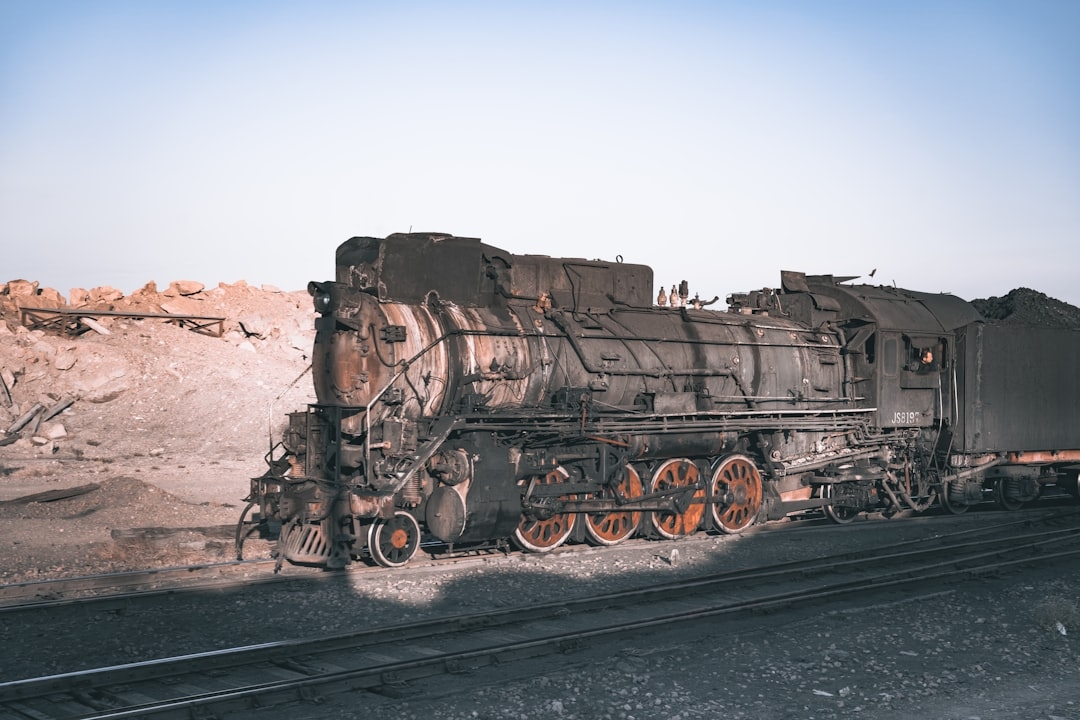
Why Can a Locomotive Pull a Long, Heavy Train?
Have you ever wondered how a single locomotive is able to pull a train that is far heavier and longer than itself? It’s a remarkable feat of physics combined with engineering. The key to this capability lies in the management of friction forces, specifically static and kinetic friction, which allow the locomotive’s wheels to grip the rails and transfer its power efficiently.
Understanding how locomotives handle these frictional forces helps to answer a fundamental question: how can a relatively small engine produce enough force to move hundreds or thousands of tons of train cars?
How Does Friction Help a Locomotive Move a Heavy Train?
The most important force at play here is static friction. This is the friction that prevents the wheels from slipping on the tracks. When the locomotive's wheels turn, static friction between the wheels and rails allows the engine to 'push' or 'pull' the train forward without slipping.
Once the wheels start slipping, kinetic friction takes over, but this force is much lower and makes pulling the train less effective. Therefore, a locomotive must maintain optimal grip (static friction) to pull heavy loads efficiently.
Static vs. Kinetic Friction Explained
Static friction occurs when two surfaces are in contact but not sliding relative to each other—think of a car’s tires gripping the road to start moving. In the case of locomotives, static friction at the wheel-rail interface allows force to be transmitted to the train cars pulling them along.
Kinetic friction, on the other hand, occurs when surfaces slide past each other, like when tires skid on wet roads. It is lower than static friction, which is why slipping wheels reduce the locomotive's pulling power significantly.
What Limits a Locomotive’s Ability to Pull?
The maximum force a locomotive can apply without wheel slip is limited by the static friction coefficient between the wheels and rails, and the weight pressing the wheels down. Generally, more weight on the driving wheels means more static friction and better grip.
This principle is why locomotives are heavy and why some designs use multiple locomotives coupled together to increase total driving force without slipping. However, there is always a balance; too much weight may damage rails or cause excessive wear.
Factors Affecting Friction and Pulling Power
- Rail conditions: Wet or oily rails reduce static friction.
- Wheel condition: Clean wheels grip better; worn wheels slip more.
- Locomotive weight: More weight increases friction but adds stress to tracks.
- Multiple units: Coupling locomotives increases available tractive force.
How Does a Locomotive Prevent Wheel Slip?
Technologies like wheel slip control systems constantly monitor wheel rotation speed. When slip is detected, power is adjusted to restore grip. This feedback loop is essential during starts or steep grades when the risk of slipping is greatest.
Locomotive engineers also adjust throttle carefully, applying power progressively to maintain static friction rather than causing wheels to spin uselessly on the rails.
Practical Considerations: What Challenges Do Railroads Face?
In real-world operations, railroads must manage several constraints:
- Weather: Rain, snow, or leaves on tracks reduce friction, increasing slip risk.
- Maintenance: Worn rails and wheels reduce grip and increase fuel consumption.
- Train length and weight: Longer trains require more locomotives or distributed power, increasing costs.
- Track conditions: Grades and curves challenge traction and require operational adjustments.
These constraints demand constant monitoring and practical decisions from operators to balance fuel efficiency, safety, and delivery schedules.
What Can We Learn From Real-World Experiences?
From direct observations, wheel slip often leads to delays and higher maintenance costs. Operators who rely too heavily on raw engine power without regard for friction limits find their trains slipping or causing rail damage. Incremental power increases and well-maintained equipment substantially improve reliability.
Additionally, coupling locomotives at intervals within the train—as opposed to just at the front—helps distribute tractive forces more evenly and reduces stress on couplers and rails.
How to Evaluate Locomotive Traction in Your Context?
To gauge if a locomotive setup will handle your expected loads:
- Assess the total train weight and calculate weight per driving axle.
- Measure or estimate rail conditions (dry, wet, contaminated).
- Verify the static friction coefficient typical for your rail and wheel materials.
- Estimate maximum tractive effort (engine power × friction coefficient × weight on driving wheels).
- Factor in environmental and operational variables like grades and curves.
This practical framework helps determine if your locomotive(s) will perform adequately without excessive slipping or wear.
Summary
A locomotive’s ability to pull a train heavier than itself hinges primarily on managing static friction at the wheel-rail interface. By maximizing weight on driving wheels and carefully controlling power output to prevent slipping, locomotives can transfer engine strength efficiently and move massive trains.
However, real-world conditions like weather, wear, and track gradients impose limits that operators must actively manage through technology and operational strategies.
Technical Terms
Glossary terms mentioned in this article












Comments
Be the first to comment
Be the first to comment
Your opinions are valuable to us