
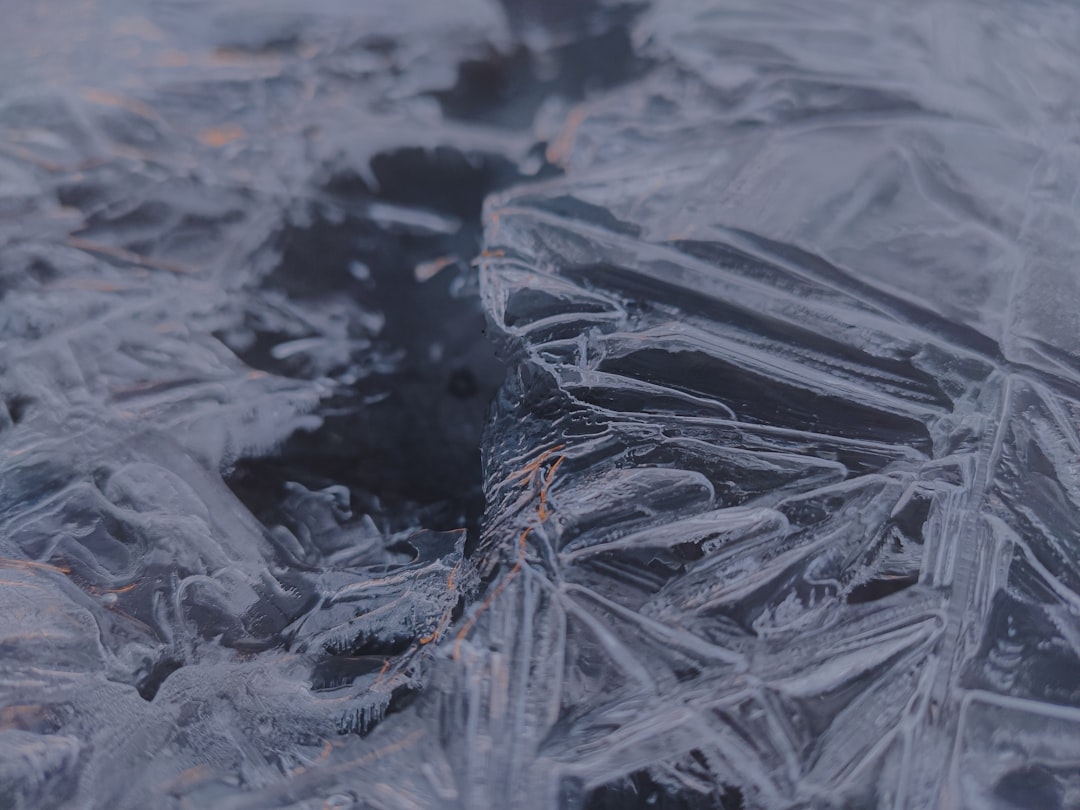
Ice's slipperiness has puzzled scientists and everyday people alike for centuries. Almost everyone has slipped on ice at least once, but why does this frozen surface behave so differently from others? The secret lies in a thin layer of water coating the ice, which creates the slick sensation underfoot.
At first glance, you might assume ice is simply smooth, but the slippery nature of ice goes far beyond surface texture. This article explores the journey to understanding ice's slickness, reveals what efforts failed to explain it fully, and discusses what the current consensus suggests. We question common explanations and highlight the trade-offs in how we interpret the causes.
How Does Ice Become So Slippery?
A widely accepted explanation is that ice is slippery because a microscopic layer of liquid water forms on its surface. This water acts like a lubricant, greatly reducing friction. But the puzzle is, why does this water layer exist in the first place? After all, ice sits below freezing temperatures where water should be solid.
One theory is that pressure from objects (like a shoe or skate) can melt the ice beneath by increasing pressure locally, known as pressure melting. However, this explanation falls short in many cases — ice is slippery even when pressure is low or temperatures are well below freezing.
Another idea involves frictional heating: as we slide over ice, friction generates heat that melts a thin surface layer. But what about when you first step on ice, before any sliding heat is created? The water layer is already there.
Surface Melting: Water on Ice Without Heat?
This leads to what scientists call surface melting or premelting, where ice molecules at the surface are less tightly bound than in the bulk, creating a thin, disordered film resembling liquid water. Even below 0°C, this layer persists. This phenomenon is partly responsible for the slippery feel.
Premelting explains many observations but it is difficult to measure directly and varies depending on temperature and impurities on the ice. This makes it a complicated mechanism to pin down fully.
What Have Researchers Tried to Understand This Phenomenon?
Scientists have employed various tools to probe the ice surface:
- Spectroscopy to detect the molecular structure of the water layer
- Atomic force microscopy to feel the texture at the nanoscale
- Experiments varying temperature and pressure to observe changes in slipperiness
Despite these efforts, experimental limitations and the thinness of the surface water layer (only a few molecules thick) make it hard to collect definitive evidence. Results sometimes contradict or depend strongly on experimental setup.
When Should We Rely on Classic Explanations Like Pressure Melting?
Pressure melting is often still cited because it works under specific conditions, especially in ice skating, where the pressure under a skate blade can be high enough to melt ice momentarily. But this approach does not generalize well to everyday slips on icy sidewalks or subfreezing temperatures.
In practical terms, relying solely on pressure melting ignores other complexities like surface premelting and environmental variations such as air humidity, snow cover, and ice texture.
Analyzing Trade-Offs Between Theories
Both pressure melting and premelting have strengths and weaknesses. Pressure melting offers an intuitive mechanism but fails under low pressure and very cold conditions. Premelting accounts for a thin liquid layer but is tough to quantify and visualize retroactively impacts slipperiness.
Simple friction-based explanations fail to address why the surface water layer is stable even before motion. This means no single theory completely covers all scenarios.
What Finally Helps Explain Why Ice Is Slippery?
The best current understanding combines surface premelting and frictional heating effects. Ice naturally forms a thin, watery surface layer, and when pressure or motion is applied, this layer increases, making the ice even more slippery.
The variable thickness and temperature sensitivity of this layer explain why ice feels more or less slippery depending on conditions like climate, recent weather, and type of ice.
Practical Insight: Why Does This Matter?
Knowing the slipperiness origins helps in areas such as:
- Designing safer footwear and tires optimized for icy conditions
- Developing better ice road maintenance and anti-slip materials
- Improving sports equipment like ice skates that exploit these mechanics
However, because the phenomenon depends on many factors, blanket solutions often perform imperfectly.
Quick Reference: Key Takeaways About Ice Slipperiness
- A watery, microscopic layer on ice causes its slick surface.
- Pressure melting alone does not explain all slippery ice cases.
- Surface premelting is a crucial mechanism behind the persistent water layer.
- Frictional heating increases this layer’s thickness during motion.
- The slipperiness varies with temperature, pressure, and impurities.
Decision Matrix: How To Approach Ice Slipperiness Problems
Spend 15-25 minutes evaluating your situation with these questions:
- What temperature range am I dealing with? Below or near 0°C?
- Is there significant pressure or sliding motion involved?
- Are environmental factors like snow cover or humidity present?
- Is the application outdoor footwear, vehicle tires, or sports equipment?
- Can I test different materials or coatings that interact with thin water layers?
Answering these helps choose the relevant theory or product to improve safety or performance on ice.
Ice slipperiness remains partly mysterious. Its complexity means practical approaches must consider multiple factors rather than rely on singular causes. Testing in your specific context delivers the most reliable results.
Technical Terms
Glossary terms mentioned in this article











Comments
Be the first to comment
Be the first to comment
Your opinions are valuable to us