
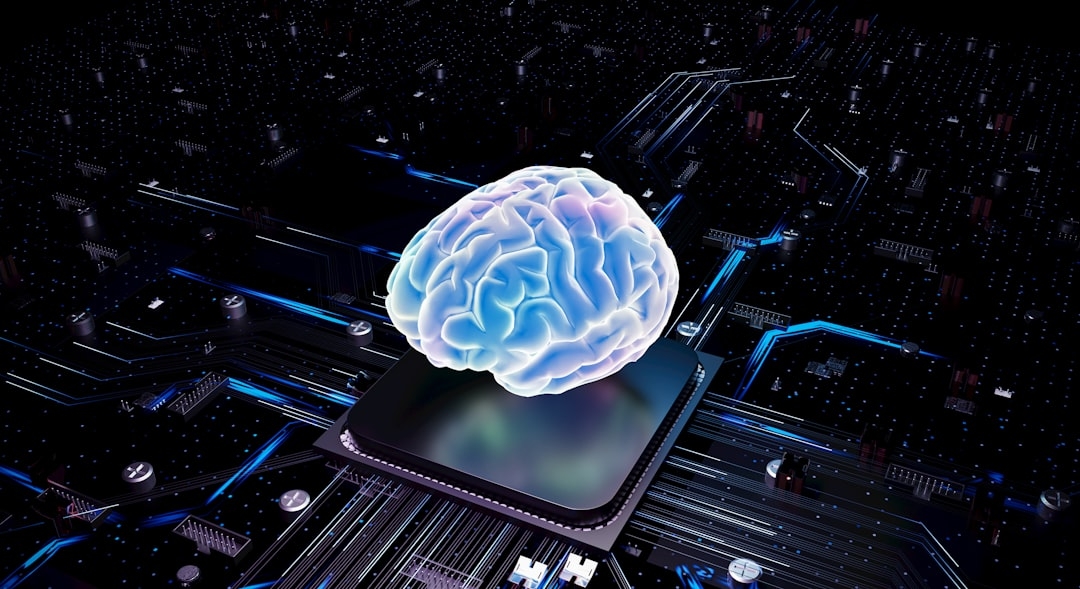
Have you ever wondered how the Hive Mind operates in the novel ‘Pluribus’? The concept of the “Joining” connecting individuals via radio waves raises fascinating questions about the physics and feasibility behind such a network. Understanding this system requires unpacking the core technology that enables people to sync their thoughts and actions in real time.
This article aims to provide a clear explanation of how the Joining works from a practical standpoint, focusing on the physical mechanisms, constraints, and real-world challenges that might arise in implementing a hive mind-like system.
What is the ‘Joining’ and How Does it Work?
In ‘Pluribus’, the Joining is described as a phenomenon where individuals connect through a shared network powered by radio waves. Radio waves are a form of electromagnetic radiation used widely in telecommunications to carry information through the air without wires. In essence, the Joining leverages these waves to transmit neural data between brains, effectively forming a collective consciousness.
Unlike internet-based communication, the Joining suggests a direct brain-to-brain interface using radio frequencies. This allows participants to “tune in” to a shared signal that synchronizes emotions, thoughts, and sensory input.
Understanding Radio Wave Communication
Radio waves travel through space by oscillating electric and magnetic fields. Regular devices like radios or cell phones interpret these waves by converting signal modulations into sound or data. When applied to the brain, this technology must decode and encode neural patterns as electromagnetic signals, which is a major technical challenge.
In practice, this means:
- Special hardware capable of reading brain activity and converting it into radio signals is needed
- Radio waves carry these signals between individuals within range
- Receiving hardware decodes these transmissions back into neural stimuli
This process forms a continuous feedback loop between members of the hive mind, enabling instant sharing of thoughts or sensations.
What Are the Main Challenges of the Hive Mind’s Physics?
Implementing a Joining-like system faces significant constraints:
- Signal Range and Interference: Radio communication depends heavily on range and clear transmission paths. Obstacles, distance, and competing signals can degrade connection quality.
- Data Bandwidth: The human brain processes vast, complex information. Compressing this data into radio waves without losing meaning is difficult and bandwidth-intensive.
- Latency and Synchronization: For a true hive mind, signals must be near-instantaneous to maintain cohesion. Delays or desynchronization lead to confusion or breakdowns in the shared experience.
- Security and Privacy: Broadcasting neural data poses privacy risks. Ensuring secure, encrypted channels is critical.
These constraints mean that while the Joining is captivating fiction, its physics and engineering are nontrivial when applied to real-world tech.
Is the Joining Realistic with Current Technology?
From a scientific standpoint, current brain-machine interfaces (BMIs) rely on invasive or external electrodes to read brain signals. Translating these signals into wireless radio data streams at high resolution remains experimental. Also, synchronizing multiple brains in real time with electromagnetic signals is beyond current capabilities.
Most brain-to-brain communication research is primitive and slow, typically limited to transmitting simple patterns or commands rather than complex thoughts. The Joining, as presented in ‘Pluribus’, is an extrapolation built on several technological leaps that have not yet been achieved.
How Does the Joining Compare to Existing Brain-Machine Interface Efforts?
Contemporary BMI projects give us some insight into the groundwork needed:
- Neural Signal Acquisition: Devices like EEG or implanted electrodes detect brain waves or firing patterns.
- Signal Processing: Algorithms decode neural activity into usable commands.
- Communication Channel: Data is sent over Bluetooth, Wi-Fi, or specialized wireless protocols.
- Feedback Integration: Sensory or motor feedback allows for two-way interaction.
The Joining extends this concept by creating a multi-node network where multiple human brains share a live, intertwined experience. This is akin to turning a simple phone call into a continuous group meditation broadcasted on invisible airwaves.
What Happens When the Hive Mind Fails?
Real-world experiments with multi-user brain interfaces have encountered obstacles such as signal dropouts, decoding errors, and sensory overload. These challenges highlight the difference between isolated communication and a fully integrated hive mind. In production environments, the Joining’s seamlessness is vulnerable to:
- Network congestion leading to partial disconnects
- Mismatched brain states causing confusion or cognitive dissonance
- Technical hardware failures breaking the immersive experience
These failures underscore how delicate and complex the physics and engineering behind the Joining truly are.
When Should You Consider the Joining Concept for Real Applications?
While a full-fledged hive mind is beyond current reality, the principle of shared cognitive states has value in certain domains:
- Collaborative Work: Teams needing rapid synchronization could benefit from enhanced neural communication tools.
- Therapeutic Uses: Sharing emotional states could advance treatments for mental health conditions.
- Entertainment: Gaming or virtual reality might leverage partial Joining to increase immersion.
However, these uses must carefully balance technical feasibility, privacy, and ethical considerations.
How Can You Evaluate the Joining Concept Quickly?
To estimate whether the Joining model fits your context, ask:
- What physical mediums (radio waves, Bluetooth, etc.) are available to facilitate wireless brain data transmission?
- Does the technology in use have sufficient bandwidth and low enough latency for near-real-time sharing?
- Are privacy and security protocols robust enough to handle sensitive neural data?
- Can users handle the cognitive load without adverse effects from synchronization errors or signal loss?
Answering these questions in 10-20 minutes using technical specs and user feedback will clarify if a Joining-like system is practical for your needs.
Summary
The Hive Mind in ‘Pluribus’ operates on the intriguing idea of linking human minds with radio-wave-based communication. While radio waves are well-understood carriers of information, encoding and decoding the rich complexity of brain data into these signals is a titanic challenge with present-day technology.
Practical issues like signal interference, bandwidth limits, latency, and user safety make the Joining a fascinating but distant concept. Nonetheless, its core physical principles offer a useful framework for emerging brain-machine interfaces and team collaboration tools, provided we recognize their current limits and risks.
Ultimately, approaching hive mind technologies with pragmatism and realistic benchmarks prevents costly missteps and paves the way for meaningful future advances.
Try the quick evaluation steps discussed here to see if your project might benefit from this cutting-edge concept—without expecting full sci-fi integration just yet.
Technical Terms
Glossary terms mentioned in this article












Comments
Be the first to comment
Be the first to comment
Your opinions are valuable to us