
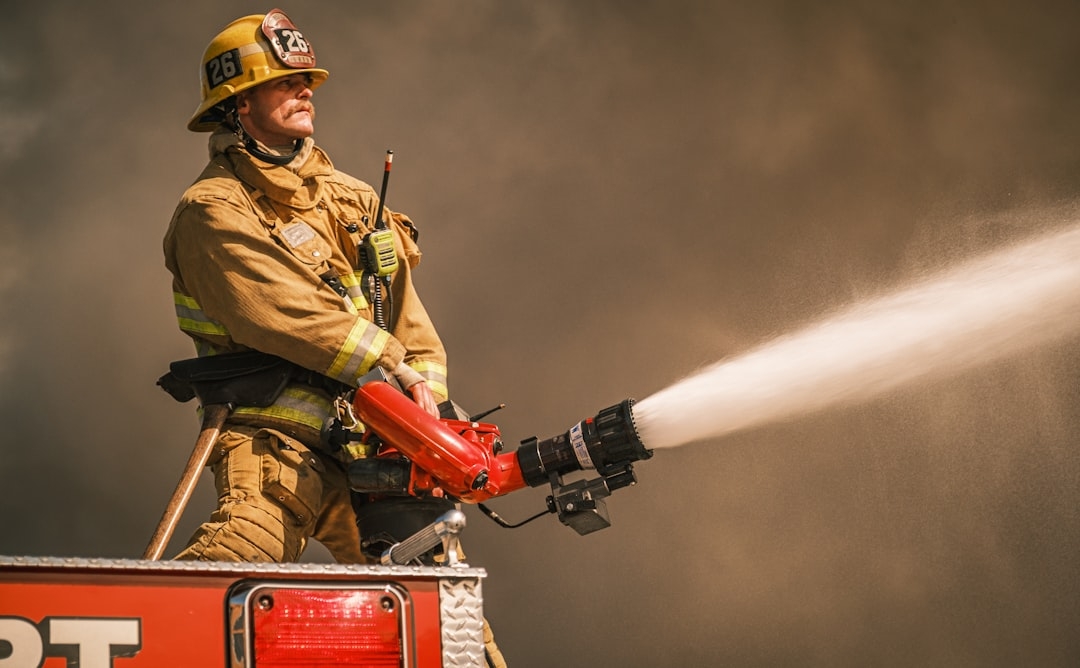
Have you ever wondered how practical, on-the-ground solutions can unlock massive potential in the AI industry? Sunny Sethi’s journey from reinventing firefighting equipment to building an AI goldmine offers valuable insights into this question.
This article explores how Sethi’s approach—starting with tangible firefighting tools and evolving into advanced AI systems—offers lessons on practical innovation, iterative problem solving, and building AI that works in real-world conditions.
What Inspired the Firefighting Innovation?
Sunny Sethi began with a simple but critical question: how can we provide firefighters with better support where it matters most—the muscle on the ground? This “muscle” refers to the direct interface and equipment that firefighters rely on during emergency response.
His initial focus was the firefighting nozzle, a tool often overlooked but essential for controlling the flow of water in dangerous conditions. By enhancing this fundamental tool, Sethi aimed to address the real challenges firefighters face, such as equipment reliability, ergonomic handling, and operational efficiency.
How Did the Transition to AI Happen?
The firefighting nozzle project revealed a deeper potential: collecting data from frontline equipment to make smarter decisions. This insight led Sunny Sethi to explore artificial intelligence as a means to transform raw data into actionable intelligence.
Here, the term AI goldmine describes the wealth of valuable information that can be mined through AI technologies, including machine learning and sensor data analysis. By integrating AI, Sethi’s company offers solutions that go beyond hardware improvements, enhancing safety, coordination, and resource allocation during emergencies.
What Challenges Were Encountered?
Transitioning from hardware to AI was far from straightforward. The team faced several obstacles:
- Data Quality and Volume: Gathering consistent, high-quality data from variable, high-stress field conditions proved difficult.
- Real-World Reliability: AI models often stumble when theoretical designs meet unpredictable environments.
- User Adoption: Firefighters needed user-friendly interfaces and clear benefits to trust AI-driven tools during critical moments.
Despite these hurdles, persistence and iterative testing helped Sethi’s company refine both the physical gear and AI applications to perform reliably under pressure.
Why Did Some Solutions Fail?
Early attempts to use off-the-shelf AI models failed to deliver. These generic systems couldn’t interpret the nuanced signals from firefighting equipment or adapt to chaotic emergencies. Overly ambitious AI designs lacked the required robustness and often ignored the ergonomic realities of frontline users.
Sethi realized the importance of developing AI systems tailored to the unique environments firefighters operate in—combining domain knowledge with technical expertise.
What Finally Worked?
The breakthrough came by integrating AI directly with improved equipment. The nozzle and other tools were equipped with sensors that fed reliable real-time data to custom AI models focused on:
- Predictive maintenance to avoid equipment failures
- Environmental hazard detection through sensors
- Resource optimization during firefighting operations
This approach created a feedback loop: better hardware enhanced data collection, making AI more effective; AI then informed improvements in equipment use and deployment, ultimately empowering the firefighters themselves.
How Does This Approach Compare to Popular Alternatives?
Many companies focus on flashy AI capabilities or broad data collection platforms that lack focus on end users. Sethi’s model shows the value of starting with a concrete tool—in this case, a firefighting nozzle—then layering AI to solve tangible problems.
This method contrasts with:
- Products that prioritize theoretical AI performance over real-world application
- Mass data collection schemes that fail to deliver actionable insight
- Solutions that overlook frontline ergonomics and user trust
Instead of chasing perfection in AI, Sethi’s team prioritized practical, incremental innovations with immediate impact.
When Should You Use This Strategy?
If your goal is to build AI solutions for high-risk, dynamic, or field-based industries, this combined hardware-plus-AI approach is highly relevant. It ensures:
- Robustness against unpredictable conditions
- Improved user acceptance through tangible benefits
- Better data quality fueling smarter AI models
Trying to apply generic AI models without domain-specific hardware often leads to disappointing outcomes in such complex environments.
Quick Reference: Key Takeaways
- Start tangible: Focus on improving essential tools or processes before layering AI.
- Iterate with users: Test solutions repeatedly in real conditions and incorporate frontline feedback.
- Use tailored AI: Customize models based on domain expertise and trustworthy data sources.
- Balance ambition & pragmatism: Recognize technical limits and prioritize reliability over flashy features.
Final Thoughts: Why Sunny Sethi’s Journey Matters
Sunny Sethi’s transition from enhancing firefighting equipment to building an AI-driven enterprise highlights the power of combining real-world domain knowledge with technology. His work demonstrates that practical tools, powered by targeted AI, create meaningful value—not abstract models detached from users.
For anyone evaluating AI solutions for complex environments, this story underscores the importance of trade-offs, resilience, and user-centric design. Following these principles, businesses can avoid costly missteps and build technologies that truly serve their users.
Concrete Next Step: Craft Your Decision Checklist
In the next 20 minutes, create a checklist to evaluate your AI project’s readiness based on these points:
- Have you identified a specific, tangible problem or tool to improve?
- Is your data reliable and collected under real-world conditions?
- Does your AI model incorporate domain knowledge and frontline input?
- Have you planned iterative testing with actual users?
- Are you balancing innovative features with practical reliability?
This checklist will guide your strategic choices and help ensure your AI investments align with real user needs and operational realities.
Technical Terms
Glossary terms mentioned in this article






Comments
Be the first to comment
Be the first to comment
Your opinions are valuable to us