

Can an algorithm succeed where central banks, with all their interest rate levers and quantitative easing, are starting to stumble? We have spent decades treating inflation as a purely monetary phenomenon—a game of 'too much money chasing too few goods.' But if you look under the hood of any global enterprise today, you will see a different story. Inflation is often the result of friction: inefficient supply chains, data silos that prevent predictive purchasing, and a massive lag between a market signal and a production response.
The Journey: From Just-in-Time to Just-in-Chaos
Our journey toward economic automation didn't start with Generative AI. It began with the lean manufacturing movement of the 1970s. The goal was simple: remove waste. For years, this worked perfectly. Global supply chains became so lean that they were effectively 'weightless.' However, this lean approach was built on a foundation of stability. It assumed that the 'pipes' of global trade would never leak.
Think of the global economy as a massive high-pressure steam engine. In a stable environment, manual valves (human-led procurement and logistics) are enough to keep things running. But when the pressure spikes—due to a pandemic or a geopolitical crisis—those manual valves are too slow. Humans have high 'latency.' By the time a procurement manager realizes a raw material price is surging, the inflationary pressure has already leaked into the consumer market. We realized that we didn't just need efficiency; we needed an autonomous pressure regulator.
What We Tried: The Era of Rigid RPA
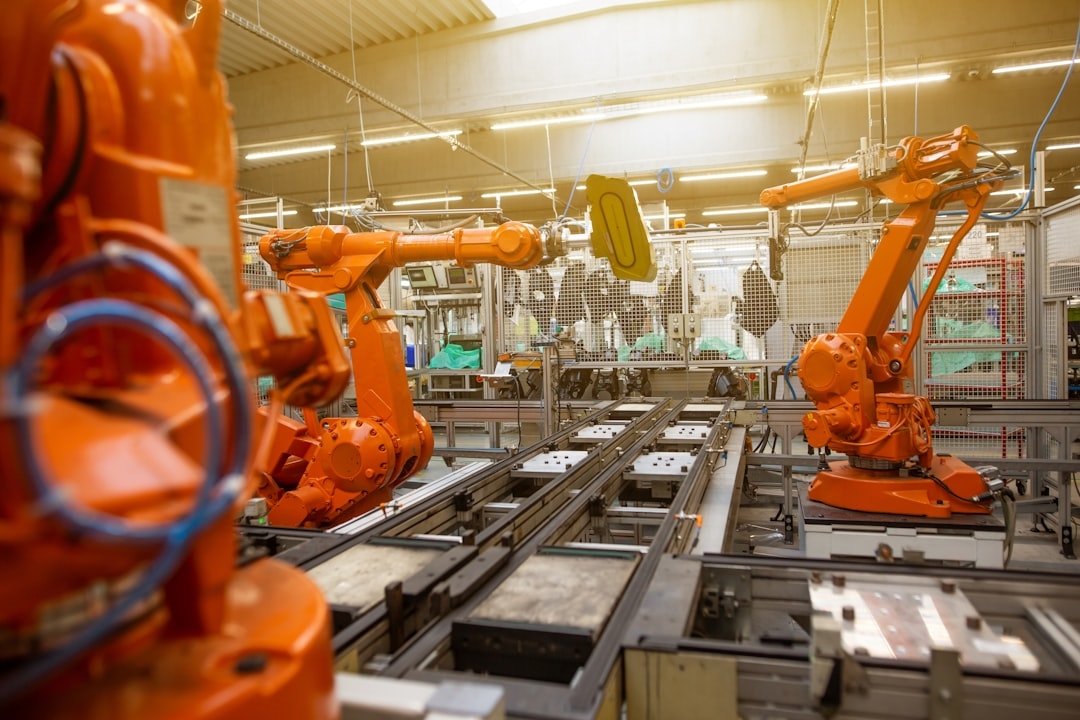
In the mid-2010s, we doubled down on Robotic Process Automation (RPA). We thought that if we could automate the 'busy work' of data entry and invoice processing, we could lower the cost of goods sold (COGS). We deployed bots to scrape prices and auto-fill spreadsheets. On paper, it looked like a win. In reality, it was like putting a faster engine in a car that has no steering wheel. The bots were fast, but they were brittle.
- Rule-based systems: They couldn't handle the 'unstructured' reality of a port strike or a sudden tariff change.
- Siloed Data: The shipping bot didn't talk to the sales bot, leading to 'bullwhip effects' where companies over-ordered inventory at the peak of a price cycle.
- High Maintenance Costs: Every time a website UI changed, the RPA script broke, creating hidden technical debt.
What Failed and Why: The Myth of the 'Magic Dashboard'
The most overrated approach in the last five years has been the 'Centralized Command Center.' Organizations spent millions building massive dashboards that visualized their supply chain in real-time. The assumption was that if managers had better data, they would make better decisions to combat rising costs.
It failed miserably during the 2021 supply chain crisis. Why? Because visualization is not action. A dashboard tells you your house is on fire; it doesn't put it out. In a high-inflation environment, the time between 'detecting a price hike' and 'hedging against it' must be measured in milliseconds, not in 'wait for the Monday morning meeting' minutes. The human-in-the-loop became the bottleneck. We were using 21st-century data with 19th-century decision-making frameworks.
What Finally Worked: Agentic AI and Predictive Elasticity
The breakthrough didn't come from better dashboards, but from 'Agentic Workflows'—systems that are empowered to take action within predefined guardrails. Instead of a bot that reports a price change, we started deploying Multi-Agent Systems (MAS) that negotiate contracts autonomously.
// Simplified logic for an Autonomous Procurement Agent
if (detected_volatility > threshold) {
    execute_hedging_strategy(asset='RawMaterials', confidence=0.85);
    recalculate_dynamic_pricing(channel='B2B');
    notify_logistics_agent(priority='high');
}
By using LLMs as a reasoning engine rather than just a chatbot, companies are now able to ingest 'soft data'—like a news report about a drought in Taiwan—and translate that into an immediate shift in semiconductor procurement strategies before the market price moves. This is deflationary by nature. It reduces the 'risk premium' that companies usually bake into their prices.
The Trade-off: Compute Costs vs. Labor Savings
We have to be honest: AI isn't a free lunch. Replacing a $60k/year analyst with an AI agent that costs $10k/month in GPU tokens and API credits is a narrow margin. The real win isn't labor replacement; it's the elimination of the 'Error Tax.' Human errors in inventory management account for an estimated 1-3% of global GDP loss annually. AI doesn't get tired, and it doesn't forget to update a spreadsheet.
Key Takeaways
- Latency is the Enemy: Inflation is often just the price of delay. Automation kills delay.
- Agentic > Predictive: Predictive models tell you what might happen; AI agents handle it when it does.
- Supply-Side Stability: AI’s true macroeconomic value is in stabilizing the supply curve, which is a more permanent fix than adjusting interest rates.
In my experience, the companies that will survive the next decade are not those that use AI to write emails, but those that use it to govern their supply chains. We are moving toward an 'Autonomous Economy' where price discovery is handled by machines, potentially decoupling growth from inflationary spikes once and for all. My stance is clear: AI won't just 'help' with inflation; it is the only technology capable of making the concept of supply-induced inflation obsolete. However, we must be careful not to trade monetary inflation for a new kind of 'compute inflation'—where the cost of the intelligence itself becomes the new bottleneck.











Comments
Be the first to comment
Be the first to comment
Your opinions are valuable to us