
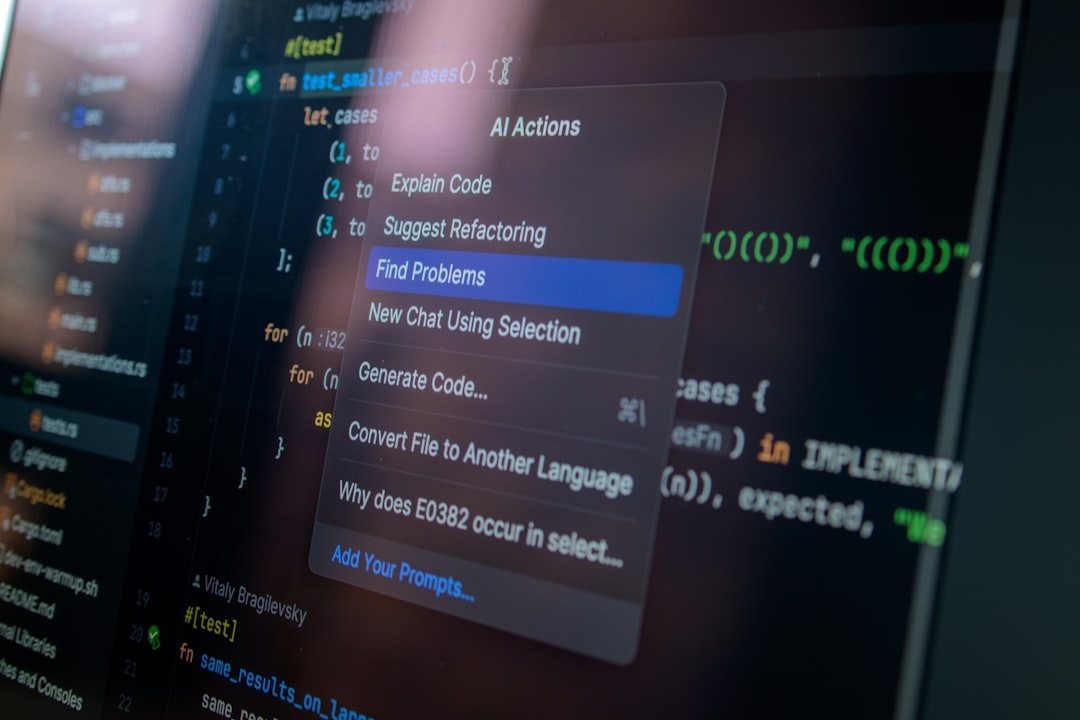
How exactly are companies using GPT-5 in their daily operations? As AI tools grow more sophisticated, businesses are eager to understand where and how these models can drive real impact.
This report sheds light on how workers across various industries have adopted GPT-5, highlighting practical tasks, departmental patterns, and what the near future holds for AI at work.
What Are the Current Adoption Trends of GPT-5 in Business?
GPT-5 has quickly gained traction since its release, particularly among knowledge workers and departments like marketing, customer service, and product development. Adoption varies, with some industries integrating AI deeply into workflows, while others experiment cautiously.
Key adoption trends include:
- Marketing teams use GPT-5 extensively for content creation, idea generation, and campaign planning.
- Customer support
- Software developers
These trends show that GPT-5 functions as a versatile assistant capable of enhancing productivity across diverse roles.
How Does GPT-5 Fit into Daily Worker Tasks?
GPT-5 primarily supports routine but cognitively demanding tasks that require language understanding and generation. This includes drafting emails, summarizing documents, brainstorming solutions, and producing technical explanations.
For example, in sales, GPT-5 helps craft personalized outreach messages quickly, freeing up time for direct client engagement. In product teams, the model assists in synthesizing user feedback into actionable insights without hours of manual review.
Technical note: GPT-5 is a large language model trained on extensive datasets, enabling it to understand context and generate coherent responses based on prompts. This allows it to adapt to specific tasks by interpreting instructions in natural language.
Which Departments Benefit Most from GPT-5?
While GPT-5’s applications span many sectors, certain departments show pronounced benefits:
- Marketing and Communications: Content generation, brand messaging, social media planning.
- Customer Service: Drafting replies, summarizing tickets, generating knowledge base articles.
- Product Management and Development: Synthesizing feedback, generating documentation, ideation support.
- Human Resources: Creating job descriptions, screening questions, employee communication.
Each department customizes GPT-5 usage according to its workflow needs, often combining AI output with human review.
Why Should Businesses Evaluate GPT-5’s Suitability for Their Workflows?
Many assume integrating GPT-5 results in instant productivity gains. However, real-world results depend heavily on thoughtful implementation. For some tasks, AI-generated content requires careful human editing, while others benefit from AI handling low-level workload autonomously.
The main challenge is balancing speed with accuracy and ensuring GPT-5 outputs meet organizational standards. Consider GPT-5 as a tool that augments human skills instead of replacing them.
How Can Organizations Effectively Implement GPT-5?
Successful GPT-5 adoption involves:
- Identifying repetitive or language-intensive tasks where AI can relieve workload.
- Training employees on best practices for prompting and editing AI outputs.
- Establishing review protocols to maintain quality and alignment with company tone or compliance.
- Monitoring AI performance and iterating on workflows based on feedback.
A phased approach combining human oversight with gradual automation works best to avoid costly errors.
What Real-World Results Are Companies Seeing with GPT-5?
Data from early adopters reveal:
- Up to 30% reduction in time spent on drafting routine communications.
- Improved creative brainstorming through AI-generated concept suggestions.
- Increased consistency in messaging across departments generating marketing collateral.
- Mixed results in technical documentation, requiring substantial human verification.
These findings underscore GPT-5’s value as a productivity multiplier, though careful vetting remains necessary.
When Should You Consider Using GPT-5 in Your Business?
If you face bottlenecks in communication-intensive tasks or repetitive writing jobs, GPT-5 might provide immediate benefits. However, it’s crucial to analyze your workflows for tasks that need creative nuance or critical judgment, as AI is less suited for those.
Remember: GPT-5 works best when paired with skilled humans who can guide, review, and refine its output.
How to Quickly Evaluate GPT-5’s Potential in Your Context
Here is a simple 10-20 minute framework you can apply to assess GPT-5 suitability:
- List your top 5 time-consuming writing or language tasks.
- For each task, evaluate complexity: Is it routine or creative?
- Check if sample outputs from GPT-5 for similar tasks are publicly available or try quick experiments.
- Estimate potential time saved versus quality risk if AI is used.
- Decide which tasks merit a pilot implementation with human oversight.
Following this checklist helps you weigh trade-offs pragmatically and avoid overhyping AI capabilities.
GPT-5 offers businesses a powerful resource to optimize workflows and boost productivity, but its impact depends on deliberate, context-aware deployment rather than blind adoption.
Technical Terms
Glossary terms mentioned in this article











Comments
Be the first to comment
Be the first to comment
Your opinions are valuable to us