
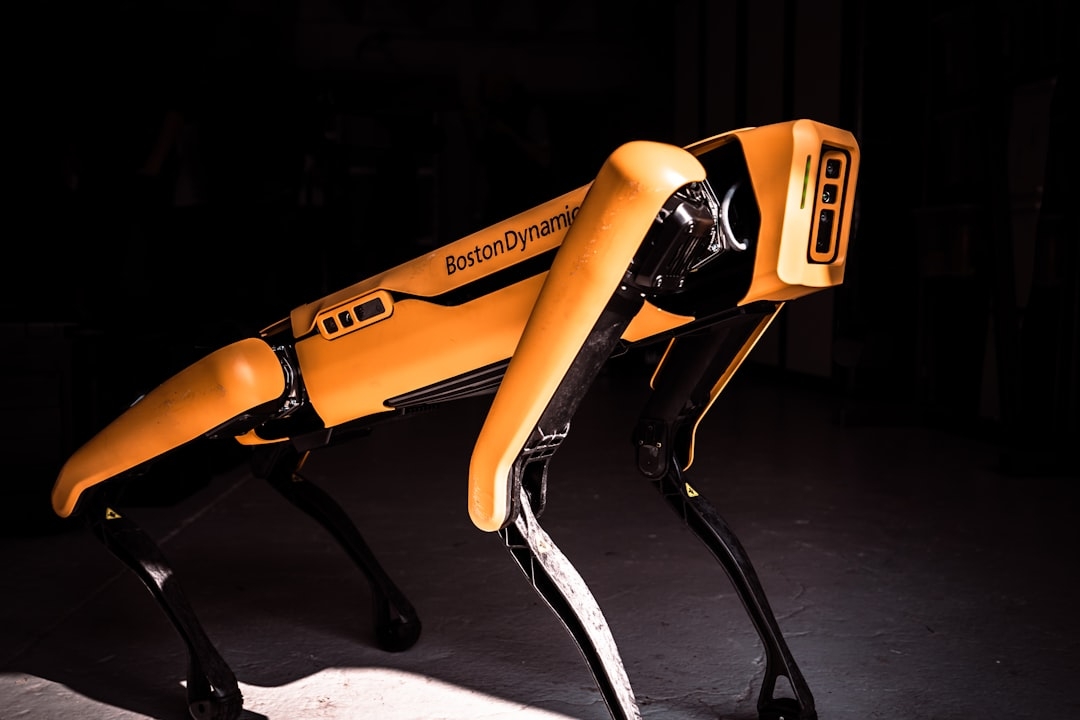
Boston Dynamics has long been a trailblazer in robotics, pushing the limits of what autonomous machines can achieve. Recently, a significant leadership change caught industry attention: Robert Playter, the company's CEO for six years and a 30-year veteran in multiple roles, announced his departure.
This transition raises important questions about the company's direction and how leadership shifts impact innovation and growth within highly specialized tech firms.
Who is Robert Playter and Why Does His Departure Matter?
Robert Playter's career at Boston Dynamics spans three decades, during which he contributed to the company’s core advancements and strategic growth. Serving as CEO from 2016, he navigated the company through commercialization, helped bring groundbreaking robots like Spot and Atlas to market, and elevated Boston Dynamics’ profile within the robotics and AI community.
His leadership coincided with Boston Dynamics’ transition from a primarily research-focused organization to one emphasizing product development and practical applications. This shift isn’t trivial – it required blending cutting-edge research with real-world scalability and business realities.
How Does Leadership Change Affect Boston Dynamics' Innovation?
When a founder-level executive or long-serving leader departs, companies often face challenges maintaining momentum. For Boston Dynamics, the stakes are higher because of the technical complexity and market maturity they operate in.
Innovation in robotics demands continuity — not only in vision but also technical execution and partnerships. A leadership change can risk disrupting this balance. However, it can also inject fresh perspectives and new strategies.
Leadership Trade-Offs in Tech Companies
Decades of experience bring deep institutional knowledge and a tested network, yet sometimes also inertia against radical shifts. New leaders might prioritize growth differently, focusing on monetization, broader partnerships, or alternative sectors.
What Comes Next for Boston Dynamics?
The company has not disclosed its next CEO at the time of Robert Playter’s announcement. Given the competitive robotics landscape, incoming leadership will need to:
- Maintain robust R&D pipelines for advanced robotic platforms.
- Accelerate commercialization efforts to capture growing market demand.
- Balance cutting-edge innovation with sustainable business models.
How these priorities are managed will shape Boston Dynamics' trajectory.
Why Does This Leadership Shift Matter for Robotics Industry Observers?
Boston Dynamics serves as a bellwether in robotics, influencing startups and established players alike. Leadership changes at such a pivotal company are more than internal HR events; they can signal shifts in industry tactics and investor confidence.
For customers seeking reliable robotic platforms, stability is critical. At the same time, fresh leadership can drive faster adoption of new use cases and foster collaborations previously unexplored.
How Should Industry Stakeholders Evaluate Boston Dynamics' Future Moves?
For businesses and investors, it is crucial to watch how Boston Dynamics navigates this transition by observing:
- Announcements of the new CEO and leadership team's strategic vision.
- Continuation or expansion of product lines such as Spot, Atlas, and Handle.
- Partnership and funding trends hinting at long-term commitments.
Scrutiny of these factors will help stakeholders decide whether Boston Dynamics remains a dependable innovator or enters a phase of uncertainty.
What Lessons Can Other Tech Companies Learn from This Change?
The stepping down of a long-tenured CEO underlines typical struggles in fast-evolving tech sectors:
- The need to balance visionary leadership with pragmatic business needs.
- The importance of succession planning to avoid operational disruptions.
- Maintaining momentum during periods of change to keep stakeholders confident.
Tech firms in AI, robotics, and beyond are advised to consider these lessons seriously to reduce risk when leaders change.
Leadership Change Checklist: How to Assess Its Impact
If you’re an industry observer, investor, or customer assessing Boston Dynamics’ leadership transition, consider this simple decision matrix:
- Leadership Experience: Does the new CEO have robotics or AI industry knowledge?
- Strategic Vision: Has the leadership clearly communicated plans for innovation and commercialization?
- Market Position: Are there signs Boston Dynamics will maintain competitive edge?
- Financial Health: Is funding sufficient to support long-term R&D and growth?
- Customer Commitments: Are service and product support maintained during transition?
Analyzing these points should take 15-25 minutes and will help clarify whether Boston Dynamics’ future is on steady footing.
Summary
Robert Playter's departure after 30 years and six as CEO marks a major turning point for Boston Dynamics. His leadership helped transform the company into a commercial robotics frontrunner. However, new leadership challenges lie ahead, where balancing visionary innovation with business execution will be critical.
Industry watchers and stakeholders alike should monitor Boston Dynamics’ next moves closely. The company’s ability to sustain growth and innovation amid this change will influence the robotics industry and wider AI-driven automation markets for years to come.
Technical Terms
Glossary terms mentioned in this article














Comments
Be the first to comment
Be the first to comment
Your opinions are valuable to us