
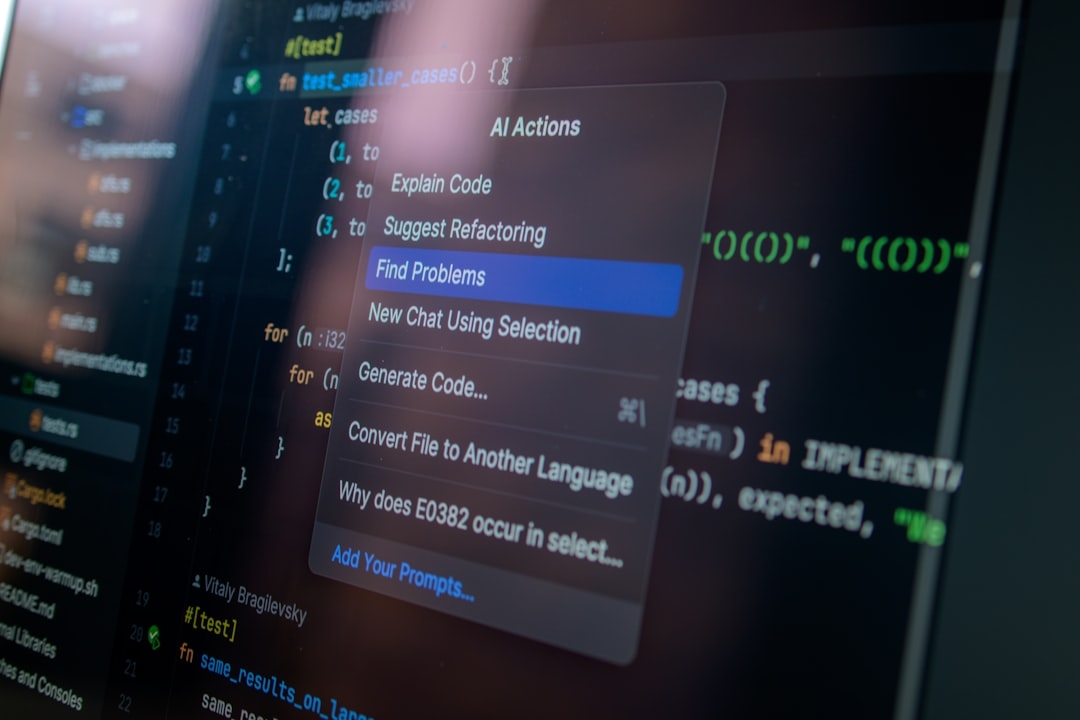
You might have heard how artificial intelligence is revolutionizing everything from chatbots to creative writing. But what if you expected an AI to handle your day-to-day office tasks—like drafting legal documents or generating investment banking reports—and it couldn’t? Recent research puts the leading AI models to the test with real-world white-collar work tasks, revealing sobering results.
Understanding whether AI is ready for the workplace means moving beyond hype. Instead of controlled lab tests or simple Q&A sessions, this new benchmark evaluates AI agents on complex consulting, investment banking, and legal tasks that require deep reasoning, accuracy, and professional knowledge. Spoiler: most top models fell short.
How Were AI Agents Tested on White-Collar Work?
This research used a benchmark specifically designed around real-world job tasks from three demanding industries: consulting, investment banking, and law. These represent the kind of white-collar work that relies on analysis, precise communication, and high-stakes decision making.
Unlike traditional AI benchmarks focused on language or pattern recognition, this setup challenged AI to:
- Analyze business cases like consultants
- Prepare financial models and summaries like investment bankers
- Draft and interpret contracts or legal briefs like lawyers
These tasks are much more than just language generation — they require domain expertise, logical reasoning, and understanding of complex instructions.
What Does the Benchmark Reveal About AI’s Capabilities?
Despite rapid advances and buzz around models like GPT and PaLM, the benchmark revealed a clear pattern:
- Most AI agents failed to deliver accurate, coherent, and actionable outputs for the tasks they were tested on.
- Errors ranged from misunderstanding critical details to producing logically inconsistent advice.
- Performance varied but was generally below the standard expected of junior professionals in these fields.
This challenges the common assumption that cutting-edge AI agents can replace or even support expert-level office work right now.
Why Don’t AI Agents Perform Well on These Tasks?
There are several reasons for the struggle:
- Domain-Specific Knowledge Requirement: White-collar tasks often need specialized knowledge that AI models trained on general internet data lack.
- Complex Reasoning: Professional work frequently involves multi-step reasoning, logic, and context retention—areas where AI still struggles.
- Subtlety and Precision: Legal or financial wording must be exact; small errors can cause major problems, which AI models tend to mishandle.
Put simply, today’s AI shines at generating fluent text but flounders when asked to accurately replicate the judgments and expertise of trained professionals.
Common Misconceptions About AI in Professional Settings
It’s easy to assume that since AI can write essays or answer trivia, it should be able to handle office tasks. However, this benchmark shows why that’s an overrated assumption.
Many overlook that white-collar work doesn’t just require language skills but also critical thinking, ethics, and understanding nuance. AI’s failure in these tasks highlights why deploying these models without careful human oversight can be risky.
How Does This Impact Businesses Considering AI?
If you’re thinking about introducing AI agents to your workplace, this research offers a cautionary tale:
- Trusting AI for complex, high-stakes tasks without robust validation might lead to costly errors.
- AI tools can support peripheral tasks (like scheduling or drafting simple content) but are not yet ready to replace trained professionals in domains requiring precision and expert judgment.
- Businesses should evaluate AI performance not just on generic benchmarks but on real task-based tests relevant to their industries.
Comparison Table: AI Models Tested vs. Task Performance
| AI Model | Consulting Task Accuracy | Investment Banking Task Accuracy | Legal Task Accuracy | Overall Pass Rate |
|---|---|---|---|---|
| Model A (GPT Variant) | 45% | 38% | 40% | 41% |
| Model B (PaLM-based) | 42% | 35% | 37% | 38% |
| Model C (Other Leading AI) | 40% | 30% | 33% | 34% |
Note: Percentages represent benchmark accuracy in performing respective task categories.
What Can You Do to Evaluate AI for Your Work?
Before integrating AI into professional workflows, you should:
- Define clear success metrics: What does passing look like for your specific use case?
- Test with domain-specific tasks: Use real assignments your team faces.
- Ensure human review: AI outputs must be validated to prevent errors.
- Focus on augmentation: Use AI to assist, not replace, experts.
How Can You Troubleshoot AI Performance Issues?
If your AI model underperforms:
- Check if the data it trained on includes relevant domain information.
- Analyze common failure points—are errors factual, logical, or due to misunderstanding instructions?
- Train or fine-tune on custom data aligned with your tasks.
- Consider hybrid human-AI workflows to catch mistakes early.
What Next? A Concrete Step You Can Take Today
Take 20-30 minutes to pick an actual task from your workflow—write a client memo, prepare a financial summary, or draft a basic contract clause. Feed this task to your chosen AI agent and critically assess its output:
- Identify key factual errors or missing elements.
- Note unclear or ambiguous language.
- Check for logical flow and completeness.
- Decide if this output would meet your professional standards.
This exercise gives immediate insight into whether the AI agent can handle your white-collar tasks and where it falls short.
Remember: AI in the workplace is still evolving. Benchmarks like these are essential to understand current limitations and avoid costly mistakes. It’s clear AI agents are not yet ready to fully take over expert-level office work but can be valuable assistants if used wisely.
Technical Terms
Glossary terms mentioned in this article





Comments
Be the first to comment
Be the first to comment
Your opinions are valuable to us