
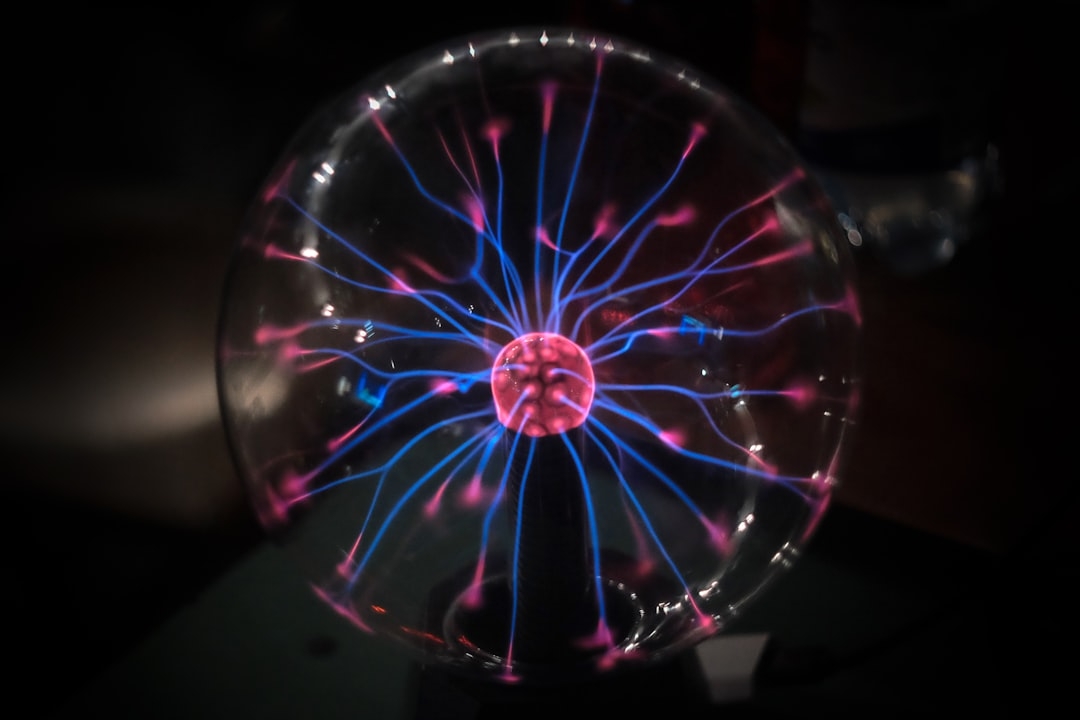
Years ago, I witnessed firsthand the immense challenge of controlling plasma in nuclear fusion experiments. The unstable nature of plasma and the intricate physics involved made even the best human efforts fall short. But today, with AI tools beginning to aid research, a new chapter is unfolding.
Nuclear fusion promises a nearly limitless source of energy, replicating the process that powers the sun. Yet, the path to sustainable fusion is clogged with scientific and engineering hurdles. In this article, we explore the core elements of nuclear fusion, its relation to nuclear physics, and the critical issue of plasma confinement—all through the lens of integrating AI technologies.
What is Nuclear Fusion and Why Does It Matter?
Nuclear fusion occurs when two light atomic nuclei merge to form a heavier nucleus, releasing vast amounts of energy. Unlike nuclear fission, used in current reactors, fusion generates less radioactive waste and offers a safer, more sustainable energy source. However, the extreme temperatures and pressures needed to initiate fusion are challenging to achieve on Earth.
The fundamental principle behind fusion involves overcoming the electrostatic repulsion between positively charged nuclei, enabling the strong nuclear force to bind them together. Achieving these conditions means replicating environments akin to the sun's core, requiring intense control over plasma—the hot, charged state of matter where fusion occurs.
How Does Plasma Confinement Work?
Plasma confinement is the practice of containing plasma long enough and at high enough temperatures to sustain fusion reactions. Plasma, a mixture of ions and electrons, behaves unpredictably and can escape containment, making it difficult to maintain the necessary conditions.
There are two main confinement methods:
- Magnetic Confinement: Using powerful magnetic fields to trap plasma in devices like tokamaks or stellarators. Magnetic fields force plasma particles to spiral along field lines, reducing contact with reactor walls.
- Inertial Confinement: Using intense laser or particle beams to compress and heat small fuel pellets momentarily, aiming to trigger fusion before the plasma dissipates.
Achieving stability in magnetic confinement devices requires real-time monitoring and adjustments, areas where human control reaches limits due to plasma's chaotic nature.
How Does AI Improve Fusion Research?
Artificial intelligence offers new possibilities by processing massive datasets from sensors and simulations to model plasma behavior more precisely. Machine learning algorithms can detect subtle patterns in plasma instabilities and predict disruptions before they occur. This predictive capability supports:
- Optimizing magnetic field configurations to enhance confinement
- Automating control system responses to maintain plasma stability
- Accelerating simulations that guide experimental design and parameter tuning
Such AI-driven insights help push fusion closer to practical energy generation by reducing trial-and-error cycles and improving experimental success rates.
What Is Plasma and Why Is It Difficult to Control?
Plasma is often called the fourth state of matter. Consisting of free-moving charged particles, it reacts strongly to electromagnetic fields but also generates complex turbulent behavior. Controlling plasma is like trying to hold a shaking, glowing cloud with invisible magnets.
When Should AI NOT Be Used in Fusion Research?
Despite AI’s advantages, there are occasions when relying too heavily on AI tools can be problematic:
- Early-stage theoretical development: Conceptual physics models need expert human insight before AI can generate effective predictions.
- Inadequate data quality: AI depends on high-quality, representative data. Incomplete or biased datasets lead to poor performance and misleading results.
- Overfitting on specific experimental setups: AI models trained on limited scenarios may fail when generalized to diverse fusion devices.
It’s crucial to combine AI with foundational physics understanding and rigorous experimental validation to avoid pitfalls.
Common Misconceptions About AI in Nuclear Fusion
Many expect AI will instantly solve fusion’s critical challenges. However, AI is a tool—not a silver bullet. While it accelerates analysis and enhances control, it cannot replace the fundamental physics or engineering efforts required.
Another misconception is that fusion is just about achieving high temperatures. The real challenge is maintaining plasma stability for sufficient duration and density—where AI provides the biggest edge.
Advanced Use Cases and Expert Insights
Some fusion projects now integrate AI to dynamically adjust coil currents in tokamaks based on real-time plasma sensor feedback. Others use AI for designing novel magnetic geometries predicted to improve confinement efficiency. These advanced uses illustrate a growing synergy between AI and fusion science.
Experts stress that collaboration between AI developers and fusion physicists is vital. AI’s strengths in pattern recognition and optimization complement human intuition about complex physical systems.
Based on direct involvement in fusion experiments and AI tool deployments, I’ve seen that success depends on balancing AI capabilities with deep domain expertise.
What Can You Do to Explore AI’s Role in Nuclear Fusion?
Try analyzing publicly available fusion datasets with simple machine learning models. Tools like Python’s scikit-learn allow beginners to experiment with classification or regression on sensor data. Even a basic predictive model trained on plasma stability indicators can reveal AI’s potential and limitations firsthand.
Understanding the foundational physics will make such experiments more meaningful and help grasp the trade-offs involved.
Key Takeaways
- Nuclear fusion holds promise for clean energy but demands precise control of plasma at extreme conditions.
- Plasma confinement remains the central technical challenge, relying heavily on magnetic and inertial methods.
- AI aids fusion research by improving plasma stability predictions, enabling dynamic control, and expediting simulations.
- AI is not a cure-all; successful application requires quality data, expert oversight, and integration with physics principles.
- Exploring simple AI models on fusion data offers practical insight into this evolving interdisciplinary field.
Technical Terms
Glossary terms mentioned in this article







Comments
Be the first to comment
Be the first to comment
Your opinions are valuable to us