
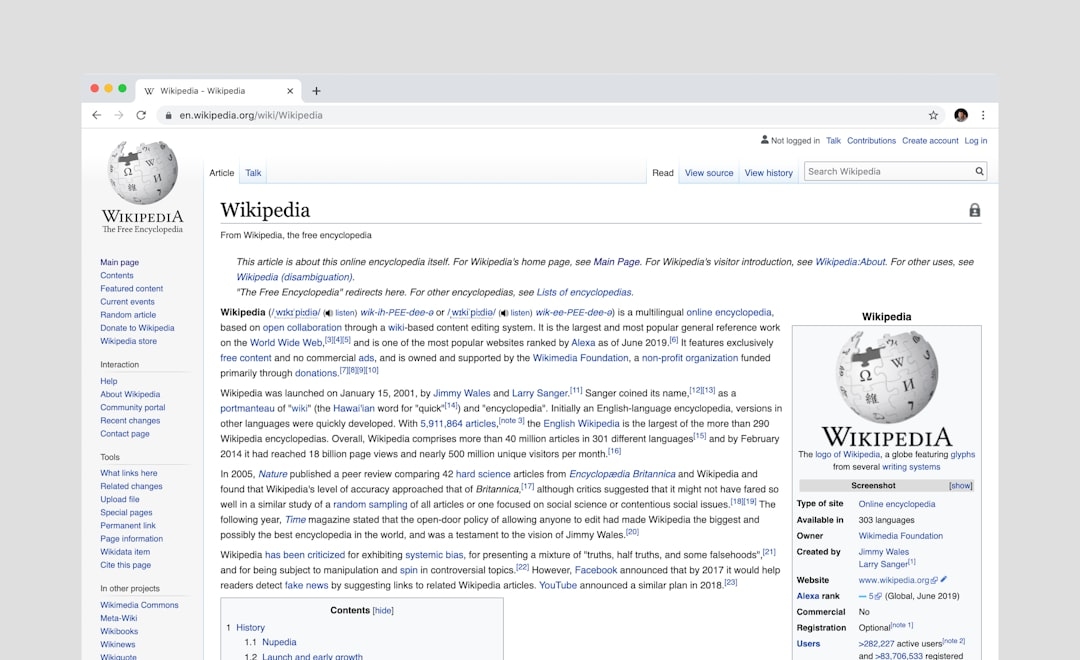
In recent events shaking the online archiving world, Wikipedia editors have decided to blacklist Archive.today, a popular web archiving service. This bold move came after an alleged Distributed Denial of Service (DDoS) attack linked to Archive.today, which compromised Wikipedia's infrastructure. The decision to remove all links to Archive.today is significant given the service has been cited over 695,000 times across Wikipedia.
What Happened with Archive.today and Wikipedia?
Wikipedia, a trusted online encyclopedia, depends heavily on web archives to preserve references. Archive.today is a web archiving service known for taking snapshots of web pages to help users access content even if the original page disappears or changes. However, the recent situation involved a suspected DDoS attack believed to be launched through or in connection with Archive.today. DDoS attacks flood a site's servers with excessive requests, making it inaccessible to legitimate users.
This forced Wikipedia editors to act by removing Archive.today links entirely, prioritizing the stability and security of the platform. The move affects hundreds of thousands of pages where Archive.today snapshots were cited as references.
How Does Archive.today Normally Work?
To understand the impact, it's important to know how Archive.today functions. It allows users to save a permanent snapshot of any webpage's current view. Unlike traditional caches or Google's archive, Archive.today stores a frozen version of the web page, including images and scripts.
This ensures that even if the original page gets deleted or altered, users can still access the original content exactly as it was. It’s widely used in research, journalism, and online communities who need reliable reference points.
Technical Explanation: What is a DDoS Attack?
DDoS (Distributed Denial of Service) attacks are malicious attempts to disrupt the normal traffic of a targeted server or network by overwhelming it with a flood of internet traffic from multiple sources. Attackers use infected computers and devices (often called botnets) distributed worldwide to generate this flood.
In this context, the suspected DDoS activity from Archive.today raised concerns about the service’s involvement or vulnerability in enabling such attacks through its platform.
Why Did Wikipedia Take This Serious Step?
Wikipedia editors’ decision reflects a cautious approach to protecting their infrastructure. Some reasons include:
- User safety: Preventing websites linked from Wikipedia from becoming points of failure or threats to its network.
- Reliability: Ensuring sources cited are from trusted and secure platforms.
- Technical stability: Mitigating risks of traffic spikes and potential service outages caused by DDoS or other attacks.
Removing Archive.today links affects many pages but demonstrates Wikipedia’s commitment to stability over convenience.
How Does This Affect Wikipedia Users and Researchers?
Many users rely on Archive.today snapshots to access historical versions of pages, especially when original links go dead. With Archive.today links removed, alternatives like the Internet Archive’s Wayback Machine might see increased usage.
However, the situation raises questions about the resilience and trustworthiness of different archiving services when security incidents occur.
When Should You Use Web Archiving Services?
If you often cite online sources or want to preserve web content for later reference, web archiving services are invaluable tools. However, this recent event highlights that:
- Not all archiving services guarantee technical security.
- Emerging security risks might compromise access to archived content unexpectedly.
- Cross-verify with multiple archives when possible to ensure reliability.
When NOT to Use Archive.today
Given the current situation, it’s advisable to avoid citing Archive.today in scenarios requiring stable, secure, and widely accepted references. Instead, consider more established platforms like the Internet Archive, which have extensive histories of service resilience.
What Are Common Misconceptions About Archive.today and Web Archiving?
Many think that all web archives operate similarly and carry equal trust. However, security practices, infrastructure, and policies vary significantly. Archive.today’s simplicity and ease of use made it popular, but this incident exposes hidden vulnerabilities. Also, some users assume that web archives can fully protect against content loss, yet archives depend on their own uptime and security defenses.
Expert Insights: What This Means for the Future of Web Archiving
Security incidents like these prompt the digital preservation community to reconsider web archive trust models and diversify archiving sources. For end users and platforms like Wikipedia, balancing accessibility with security is a continuous challenge.
Web archiving must consider potential abuse vectors, such as being used unknowingly in cyber attacks like DDoS. This incident emphasizes the need for:
- More rigorous vetting of archiving services
- Robust infrastructure capable of handling unexpected abuse
- Increased collaboration between large platforms and archivers to address shared security threats
What Can You Do Next?
If you rely on archived web content, try the following experiment:
- Pick a frequently cited web archive (e.g., Archive.today or Wayback Machine).
- Test accessibility by visiting multiple archived pages on that platform.
- Note any downtime or failures.
- Compare content availability and loading speed between archives.
- Develop a personal checklist for archiving references using multiple trusted services.
This exercise will deepen your understanding of web archiving reliability and prepare you to choose safer, more resilient sources for critical referencing.
Understanding the Wikipedia-Archive.today issue teaches us about the delicate balance of digital preservation, security, and trust on the modern internet. It’s a reminder that even widely used services can face vulnerabilities impacting large communities.
Technical Terms
Glossary terms mentioned in this article












Comments
Be the first to comment
Be the first to comment
Your opinions are valuable to us