
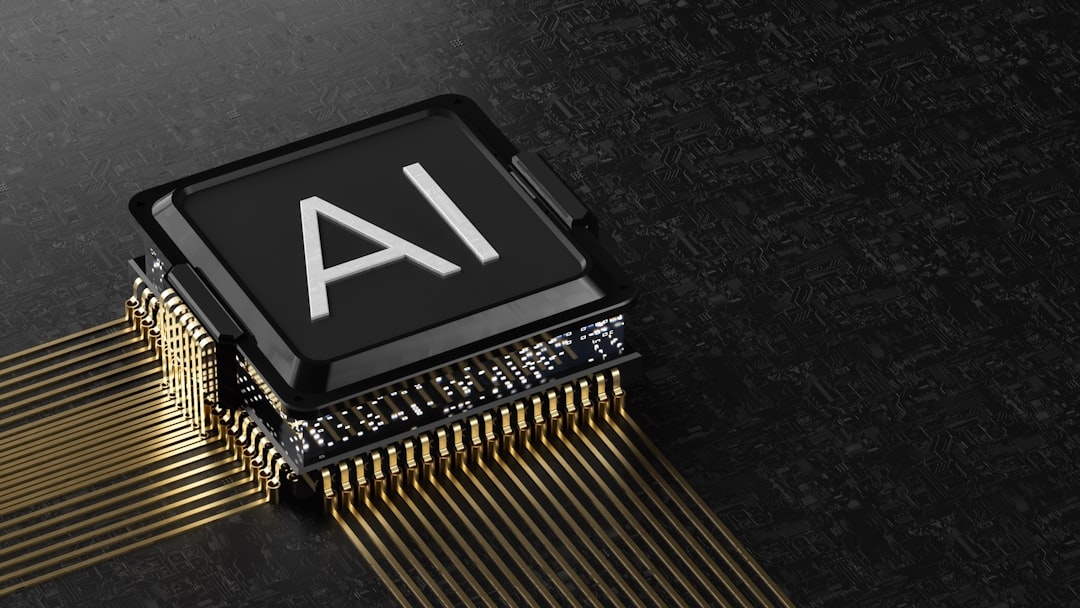
In the fast-evolving world of artificial intelligence, hardware innovation often determines who leads the market. Nvidia has been a dominant player with its AI chips, but a new contender has emerged. MatX, a startup founded in 2023 by former Google TPU engineers, recently secured a remarkable $500 million in funding to develop AI chips designed to challenge Nvidia's supremacy.
This article explores the background of MatX, the significance of its funding, and how its technology stacks up against Nvidia’s offerings. We’ll break down the key trade-offs and help readers understand what this means for the future of AI hardware.
Why Does MatX's Funding Matter in AI Chip Development?
The $500 million raised by MatX is not just impressive in sheer size but signals strong confidence in its potential to disrupt the AI chip market. Founded by engineers who worked on Google's Tensor Processing Units (TPUs), MatX benefits from deep expertise in designing specialized AI accelerators.
TPUs are custom-built chips optimized specifically for machine learning workloads, offering high efficiency and speed. MatX aims to leverage this engineering pedigree while targeting the broader AI hardware ecosystem now dominated by Nvidia.
How Does MatX's AI Chip Technology Compare to Nvidia's?
Nvidia's AI chips have set industry standards with their blend of raw computational power and broad software support. However, MatX’s team claims their architecture offers improvements in efficiency and cost-effectiveness. Although detailed benchmarks are scarce as of yet, the $500 million investment underscores high expectations.
Key differentiators include:
- Specialized Architecture: MatX is expected to build on TPU-inspired designs, emphasizing custom silicon for matrix multiplication and neural network operations—the core of AI workloads.
- Hardware-Software Co-Design: Former Google TPU engineers are adept at tightly integrating hardware with AI frameworks, potentially improving performance and developer experience.
- Cost and Energy Efficiency: In AI chip design, there's always a trade-off between raw power and energy consumption. MatX appears focused on balancing these to create more affordable AI acceleration without massive power draws.
However, Nvidia's ecosystem advantages, such as the CUDA platform and mature software stack, remain significant hurdles. MatX must convince developers and enterprises to adopt their platform despite Nvidia’s entrenched position.
What Are the Potential Trade-Offs Between MatX and Nvidia AI Chips?
When evaluating AI chips, buyers often face trade-offs:
- Performance vs. Ecosystem: Nvidia offers powerful chips with decades of software development. MatX might deliver specialized performance but will need time to build comparable tooling.
- Cost vs. Compatibility: MatX could be more cost-effective, but switching from Nvidia’s established platforms might involve compatibility or migration challenges.
- Innovative Architecture vs. Proven Reliability: While MatX offers cutting-edge architecture, Nvidia’s products are battle-tested in a wide range of production scenarios.
Organizations eyeing AI hardware must weigh whether to bet on MatX’s potential for innovation and cost savings or stick with Nvidia’s broadly supported, reliable solutions.
When Should Companies Consider MatX's AI Chips?
MatX’s emergence presents an option primarily for organizations prioritizing efficiency, innovation, and cost-effectiveness in AI infrastructure. Early adopters in research labs or startups seeking alternatives to Nvidia's premium pricing may find MatX appealing.
However, companies heavily invested in Nvidia's ecosystem or requiring guaranteed long-term support might prefer to wait until MatX’s technology matures and compatibility improves. Transitioning AI workloads to new hardware always involves risks, and production stability is critical.
Key Considerations Include:
- Existing software and hardware stack compatibility.
- Specific AI workloads — some may benefit more from MatX’s architectural features.
- Budget constraints and willingness to experiment with emerging technologies.
How Can Developers Prepare for the Rise of New AI Chip Startups?
As startups like MatX push AI hardware innovation, developers should update their understanding of AI chip architectures and maintain flexibility in deployment strategies. Avoid locking entirely into one vendor’s stack to reduce switching costs.
Being informed about trade-offs in chip efficiency, programming models, and integration complexities is crucial. This approach prevents overspending on hardware and allows faster adoption of better-performing solutions when they become available.
Checklist to Navigate AI Chip Choices:
- Evaluate your workload’s sensitivity to latency, throughput, and power consumption.
- Test emerging chip platforms when possible to gauge real-world performance.
- Maintain modular software designs to ease hardware transitions.
- Monitor developments from startups like MatX for new opportunities.
By staying agile and informed, companies can position themselves to benefit from innovations without jeopardizing production stability.
Summary of MatX’s Impact on AI Chip Market
The launch of MatX and its $500M funding round highlights intense competition and innovation in AI hardware. While Nvidia remains a dominant force, MatX’s TPU heritage promises compelling alternatives for AI acceleration—especially in efficiency and cost.
Decision-makers must weigh trade-offs between the proven reliability and vast ecosystem of Nvidia against the potential innovation and specialization offered by MatX. Careful evaluation aligned with workload needs and risk tolerance will guide optimal choices in this competitive landscape.
To make an informed decision, consider completing the provided checklist and decision matrix. This practical exercise will help assess whether MatX’s AI chips suit your use case or if Nvidia remains the better option for now.
Technical Terms
Glossary terms mentioned in this article








Comments
Be the first to comment
Be the first to comment
Your opinions are valuable to us